Leaving standard electrical lines exposed to heavy moisture or deep water immersion is a fast way to short out your equipment and trigger costly system shutdowns. That is exactly why choosing the right waterproof cables is critical for rugged outdoor, marine, or industrial applications.
Unlike basic jacketed wires, properly engineered waterproof cables rely on internal water-blocking gels, tapes, and specialized polymers to stop moisture tracking in its tracks. Whether you are routing power to outdoor sensors or subsea systems, understanding how these heavy-duty waterproof cables are constructed ensures your hardware stays live and safe. Let’s break down the core specs.
Waterproof Cables: What Are They?
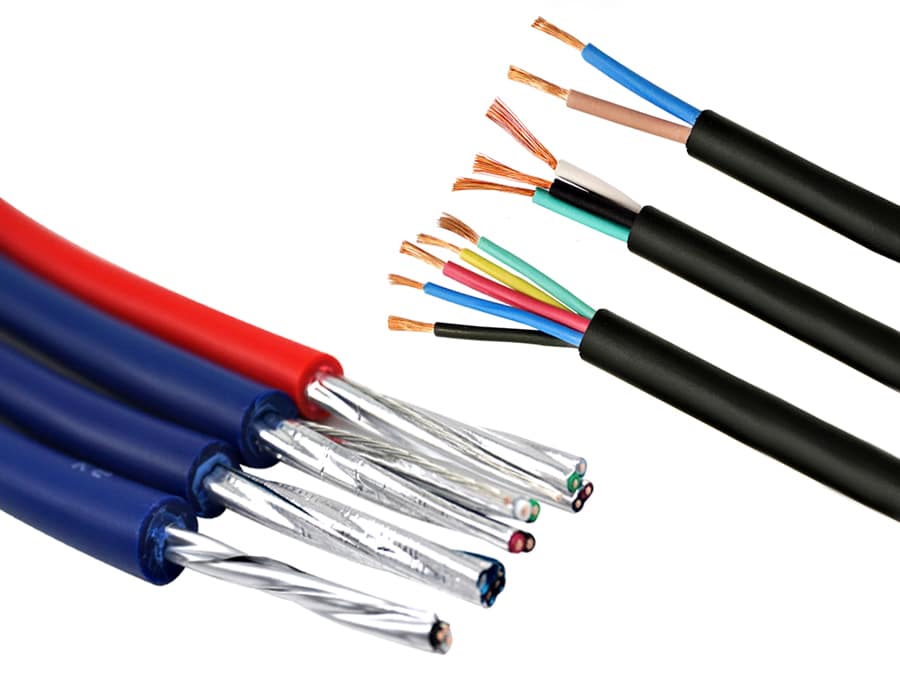
Waterproof or water-resistant cables are multi-conductor cables designed to operate in wet or aquatic environments. They can handle various types of water, including saltwater, freshwater, and chlorinated pool water. Due to their unique design and manufacturing techniques, these cables can be submerged at various depths. As the components used to manufacture these cables are water-resistant, they remain protected from moisture and water penetration, ensuring their effective operation at all times.
Benefits
Several benefits can be singled out from the use of waterproof cables in moist or wet environments:
- Reliability: The use of waterproof cables prevents movement or moisture transfer, ensuring the system’s uninterrupted operation.
- Safety: Protecting cable control electronics from exposure to water risks and thus reducing hazards related to electrical issues;
- Durability: Because the components of waterproof cables are designed to prevent leaks, these cables have a longer lifespan.
Applications
These cables are widely used in several sectors:
- Military cables: for equipment used in inclement and wet weather;
- Pressure Sensor Equipment: in environments with pervasive moisture;
- Oil and Gas Refineries: exposed to water and moisture at the facility;
- Fire Alarm Systems: in environments partially subjected to water.
Romtronic’s Special Waterproof Cables
- Custom Solution Cables
- Unique and application-specific
- Low Minimum Quantity
- Suited to low-volume needs or feasibility testing needs
- Competitive lead times
- Custom requests ship in the time it takes to do a stock order
- Technical support available
Materials Used
Waterproof cable jacket materials such as PE or PVC.
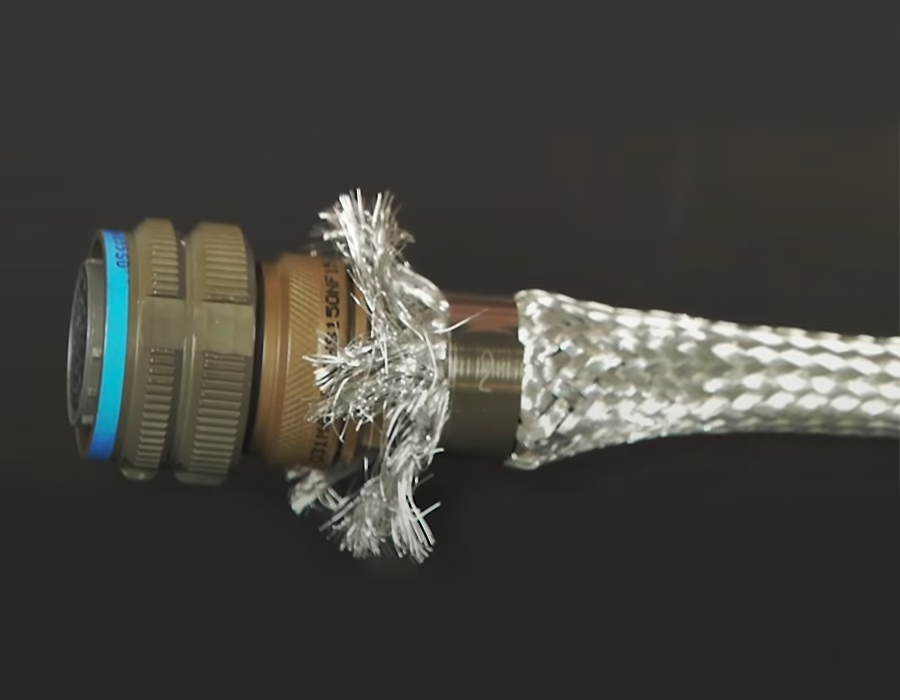
Waterproof cables feature water-blocking tapes, gels, or fillers embedded in the cable’s structure to resist water and maintain insulation. Connectors and terminals made of water-blocking, corrosion-resistant materials allow the cable to remain submerged for extended periods. Therefore, corrosion-resistant metallic components in connectors or terminals extend the life of waterproof cable in wet environments. In addition, using a flexible insulating material, such as ethylene-propylene rubber or cross-linked polyethylene, ensures that the waterproof cable is not moved or shaken, preventing it from breaking down in the event of a fault.
Technical Specifications
Different types of waterproof cables may have different technical specifications. For example:
- Gauge: Ranging from 4/0 to 36 AWG
- Voltage: Between 30V and 600V
Types and Classifications
The characteristics and types of waterproof cables differ by level of protection and compatibility. Depending on environmental conditions and the degree of water exposure, the level of water protection ranges from AD1 to AD8. They follow the UNE standard EN 20460-3:1996 Cable connections.
Structural Types and Waterproof Forms
Structural forms and waterproof forms of waterproof cables include:
- Single-core Cable Waterproof Structure: A semi-conductive, water-blocking tape is used, and the outer sheath is designed to prevent water absorption.
- Aluminum-Plastic Composite Tape Waterproof Layer: A waterproof layer is formed by applying an aluminum-plastic composite tape to the cable core.
- HDPE Outer Sheath: The outer sheath is directly extruded on the cable to prevent water from entering.
Conclusion
Understanding the structure, types, and applications of waterproof cables is crucial for selecting the right type for specific engineering projects. As technology advances, waterproof wires will remain critical in many areas, and this knowledge will help ensure the highest cable performance in environments with humidity.
Waterproof Cables FAQ
Answer: Water-resistant cables use standard plastic jackets to deflect splashing water or light rain, but they fail quickly under standing water. Conversely, true waterproof cables embed internal water-blocking tapes or hydrophobic gels that fill every internal air gap. Therefore, even if an object punctures the outer jacket, these internal layers swell instantly to stop water from tracking down the line.
Answer: Polyethylene (PE) serves as the industry standard for underwater submersion because its molecular structure provides excellent moisture resistance and zero water absorption. Polyvinyl Chloride (PVC) offers better flexibility for wet outdoor setups. However, PVC breaks down much faster and absorbs significantly more water over long-term deep submersion.
Answer: These classes define the exact environmental water severity a cable can handle under standard specifications:
AD1 to AD4: Covers environments ranging from negligible moisture to splashing water.
AD5 to AD7: Protects systems exposed to low- to high-pressure water jets or temporary submersion.
AD8: Certifies the cable for continuous, deep-water immersion at specified operational pressures.
Answer: Water eventually creeps along exposed termination points. Specifically, using corrosion-resistant contacts—such as gold-plated copper pins or nickel-plated couplings—prevents galvanic corrosion from degrading electrical conductivity when exposed to humid air.
Answer: XLPE insulation features a thermoset molecular structure that resists environmental stress cracking and moisture absorption. Consequently, it prevents the formation of “water trees”—microscopic cracks that grow within wire insulation under electrical stress in wet environments —which eventually cause total dielectric breakdown.
.avif)
Sam Wu is the Marketing Manager at Romtronic, holding a degree in Mechatronics. With 12 years of experience in sales within the electronic wiring harness industry, he manages marketing efforts across Europe. An expert in cable assembly, wiring harnesses, and advanced connectivity solutions, Sam simplifies complex technologies, offering clear, actionable advice to help you confidently navigate your electrical projects.