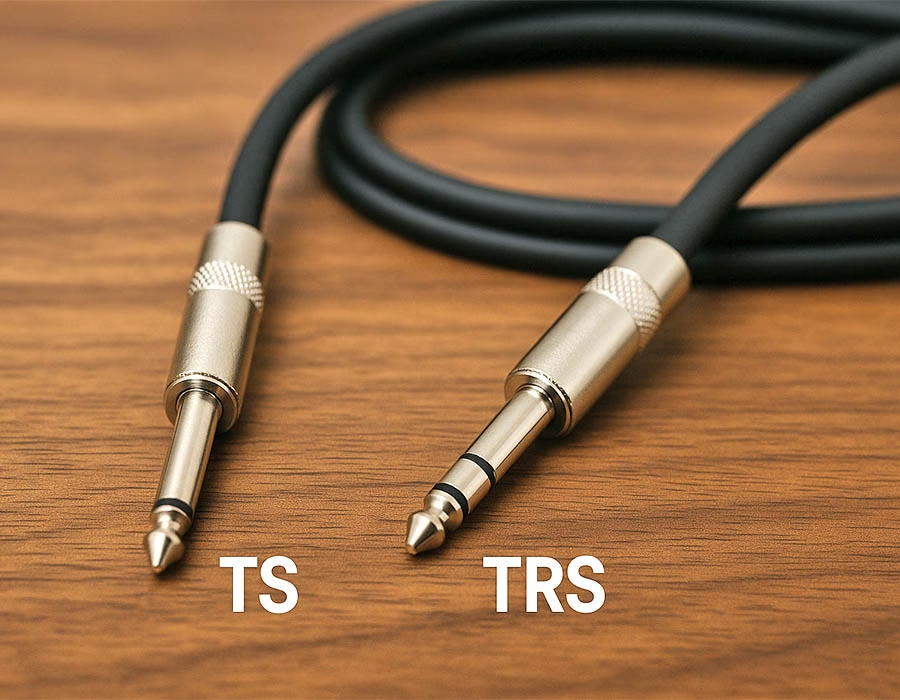
In robust or high-performance cable assemblies, achieving a 360° shield termination is essential. This ensures that the foil or braided shield of the cable is securely gripped around the connection, preventing EMI leaks and maintaining grounding continuity.
Solder sleeves, mechanical clamps, and braid cone backshells are the three most used techniques. Although they do so in distinct ways, both methods offer a firm grounding and strain relief.
Braid Cone Termination
What it is:
A braid cone termination traps the cable’s braid all the way around its circumference using a conical metal insert in the connection backshell.
How it works:
Pull the braid over the cable, put it onto a flared-cone backshell, and tighten the nut. By uniformly distributing pressure, the cone guarantees a firm 360° contact.
Advantages:
- Excellent electrical grounding
- Continuous contact across the shield
- Compatible with heat-shrink for environmental sealing
Best use:
High-speed/coaxial cables, aerospace, and military-grade connectors.
Pro Tip / Operation Tip:
Before placing the cone, trim the braid ends neatly. To prevent moisture and mechanical stress, apply a heat-shrink over the connection.
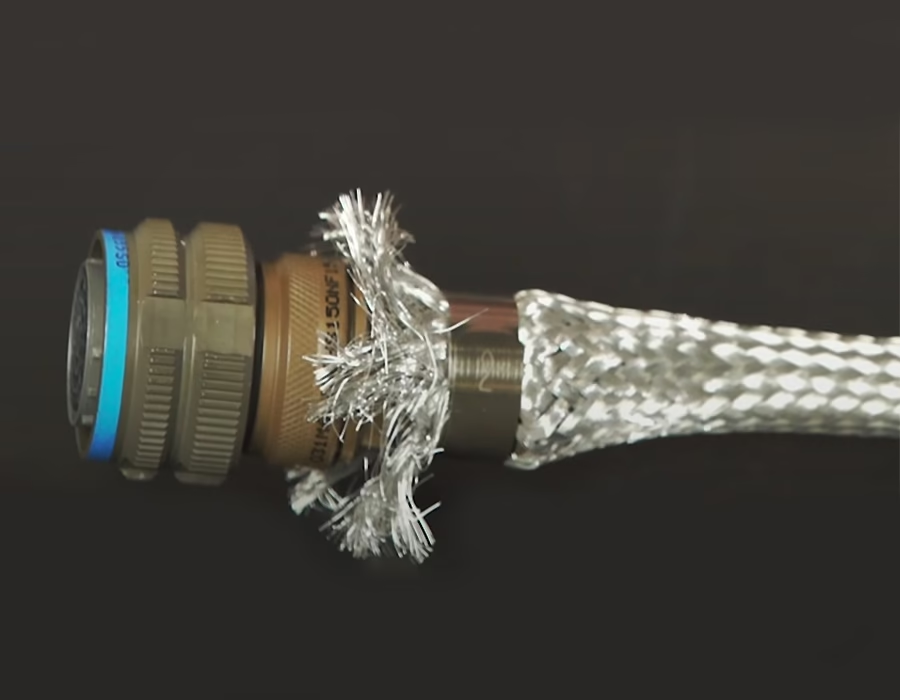
Mechanical Clamp / Band Termination
What it is:
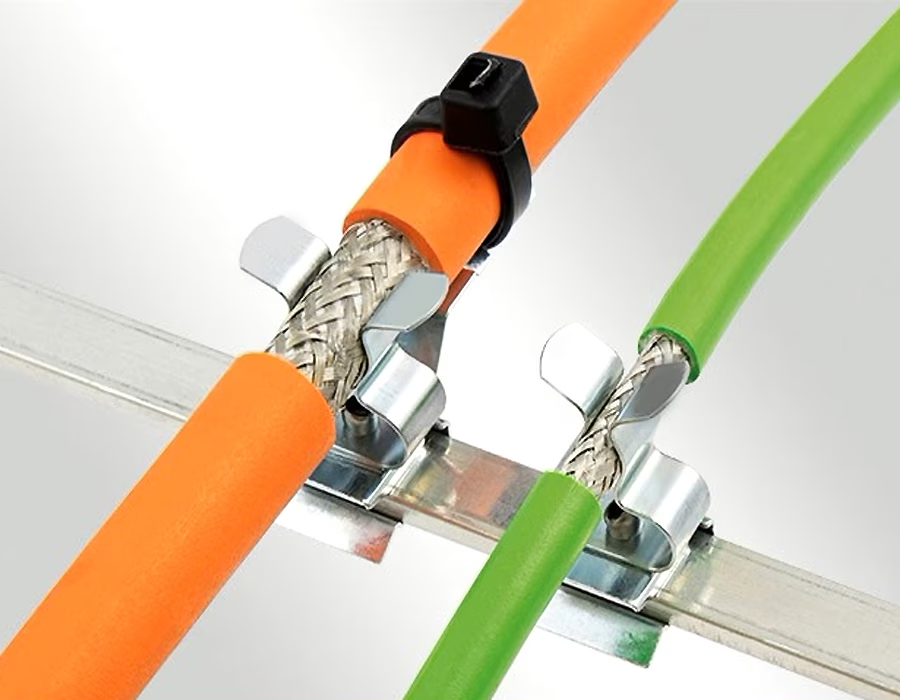
Uses a metal clamp, band, or screw mechanism to secure the shield to the connector shell.
How it works:
Flaring out the braid, slide the clamp over it, and tighten. The clamp pinches the braid, giving 360° radial contact.
Advantages:
- Strong, reusable connection
- Provides mechanical strain relief
- Easy field installation and rework
Best use:
For industrial, aerospace, or large-diameter cables, where robust, repeatable connections are necessary.
Pro Tip / Operation Tip:
Check for stray braid strands before tightening. Perform a continuity test after assembly to confirm complete 360° contact.
🔧 Looking to ensure consistent, high-quality shield terminations across your cable builds?
Romtronic offers precision-engineered termination options—braid, cone, clamp, or solder sleeve—matched to your design and production needs.
👉 Contact our engineering team for tailored support →
Solder Sleeve Termination
What it is:
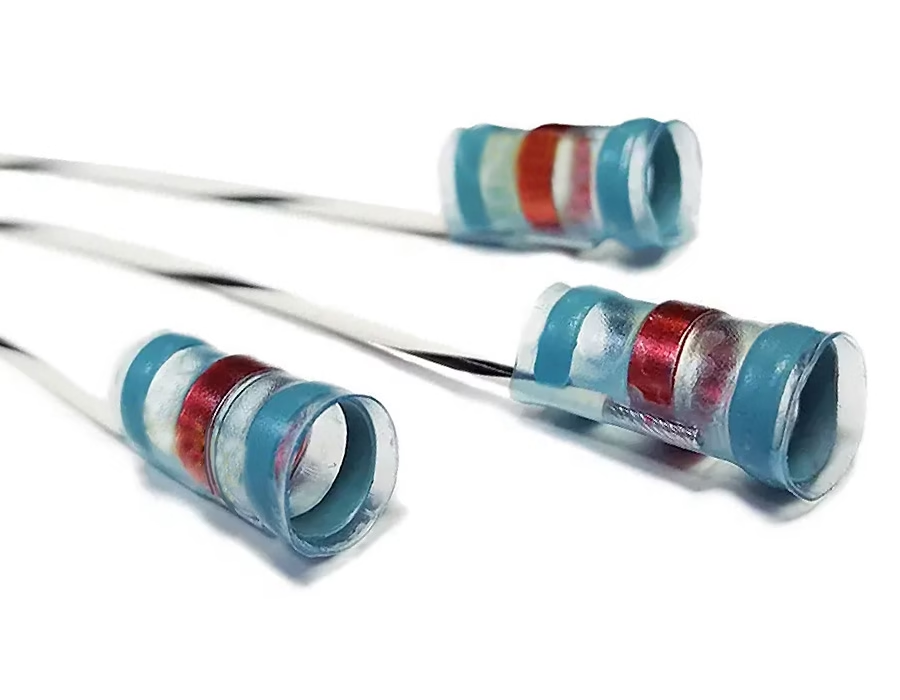
A heat-shrink sleeve preloaded with solder and flux, providing one-step soldering, sealing, and strain relief.
How it works:
Place the braid or drain over the stripped cable end, slide it over, and heat until the solder melts and the sleeve shrinks. A sealed, long-lasting connection is made when the molten solder flows into the braid.
Advantages:
- Waterproof and environmentally sealed
- One-step solder & seal
- Compact, inspection-friendly
Best use:
Sealed applications: aerospace, medical devices, high-humidity or harsh environments.
Pro Tip / Operation Tip:
Use a color-change indicator if available. Ensure sleeve covers are braided completely before heating to avoid cold joints.
Comparison Table
| Termination Method | Key Feature | Pros | Typical Use Case |
|---|---|---|---|
| Braid Cone | Conical metal insert | Full 360° contact, excellent grounding | High-speed/coaxial cables, aerospace |
| Clamp / Band | Mechanical compression | Robust, reusable, stress relief | Industrial, military, large cables |
| Solder Sleeve | Heat-shrink with solder | Sealed, permanent, waterproof | Aerospace, medical, harsh environments |
Frequently Asked Questions (FAQ)
A: Gaps in the shield allow EMI leakage. Full 360° ensures continuous conductivity and minimizes impedance.
A: Use cones or clamps for mechanical robustness and reworkable connections. Use solder sleeves when a sealed, permanent joint is needed.
A: Trim stray braid strands. For solder sleeves, avoid overheating and verify sleeve coverage. Always test continuity.
⚡ Need shield termination solutions that stand up to vibration, environmental stress, and EMI scrutiny?
Romtronic’s engineered cable assemblies support all termination styles—clamp, cone, braid, solder—and we can optimize for your application’s reliability and manufacturability.
👉 Talk to our specialists about your shielded cable requirements →
Conclusion
Understanding the merits, cons, and proper usage of braid cones, clamps, and solder sleeves helps engineers achieve dependable 360° shield termination. Each method retains signal integrity, lowers EMI, and assures robust grounding in demanding applications.
.avif)
Sam Wu is the Marketing Manager at Romtronic, holding a degree in Mechatronics. With 12 years of experience in sales within the electronic wiring harness industry, he manages marketing efforts across Europe. An expert in cable assembly, wiring harnesses, and advanced connectivity solutions, Sam simplifies complex technologies, offering clear, actionable advice to help you confidently navigate your electrical projects.