


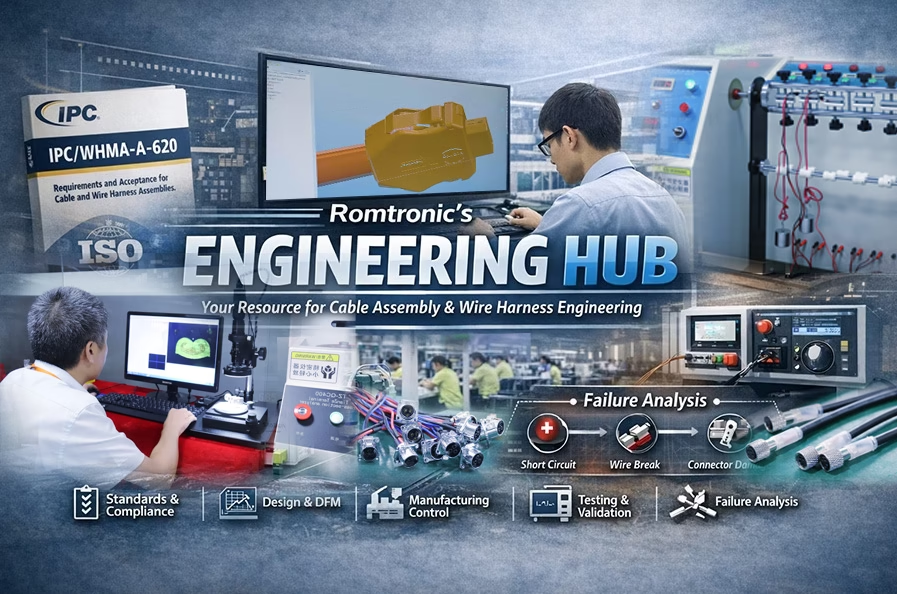
Explore Romtronic’s comprehensive Engineering Hub for cable assembly and wire harness design, manufacturing, testing, and failure analysis. Gain practical insights, best practices, and quality checklists for OEM and industrial projects.
Whether you’re an electrical engineer, quality manager, or procurement specialist, this hub provides actionable knowledge to help you:
- Reduce design and production risks
- Ensure product reliability and longevity
- Optimize manufacturing and assembly processes
Dive into our five core engineering pillars below and explore curated guides from Romtronic experts.
Explore Our Five Core Engineering Areas
1. Standards & Compliance
Ensure your cable assemblies meet industry-leading standards for quality, safety, and reliability. Our guides cover ISO 9001, ISO 13485, IATF 16949, UL, and RoHS/REACH compliance.
Learn More: Standards & Compliance Hub
Related Articles:
- Medical Wire Harness Standards and Certifications: What You Need to Know
- Appliance Wire Harness Standards and Certifications You Should Know
- Robot Wire Harness Standards and Certifications You Should Know
- Industrial Machinery Wire Harness Standards and Certifications You Should Know
- Marine Cable Assemblies for Modern Vessels: Standards, Applications, and Reliability
- Understanding Wire Gauge Charts: AWG, SWG, and IEC Standards Explained
Design & DFM (Design for Manufacturability)
Optimizing your wire harness or cable assembly starts at the design stage. Focus on wire selection, bend radius, shielding, connector choice, and manufacturability to ensure long-term reliability.
Learn More: Design & DFM Hub
Related Articles:
- Multi-Voltage Wire Harnesses: Design Tips for Reliability
- Future-Ready Cable Designs: Preparing for USB 4.0 and Beyond
- Cable Bend Radius: Design Rules and Common Mistakes
- How to Design Waterproof Cable Assemblies: A Complete Guide
- JST-XH vs JST-PH: Key Differences in Pitch, Current & Latch Design
- USB-C PD Cables Simplify Bedside Monitor Design (IEC 60601-1)
- Common Challenges in Medical Wire Harness Design and How to Overcome Them
- Challenges in Designing Wire Harnesses for Industrial Machinery
- Medical Grade USB Cables: Design and Certification Essentials
- How to Design a Custom Car Wire Harness for EV Applications
- Designing Harnesses for Robotic Welding Cells
- Custom Radar & LIDAR (Laser) Harness Design for Automotive, Defense & Robotics
- A Comprehensive Guide to Custom Wire Harness Design for Medical Devices
- The Ultimate Guide to Modular Wire Harnesses: Design, Benefits & Industry Applications
- Mastering Electrical Wire Harness Design: A Comprehensive Guide
- Board-to-Board vs Wire-to-Board Connectors: An Engineering Selection Guide
- Industrial RJ45-to-RJ45 Cables: 360° Shielding, Termination, and USB Cable Selection
- SDI Cable Selection Guide – Comparing 3G-SDI vs 12G-SDI and More
- CAN Bus Cable Selection and Usage Guidelines
- Custom Engine Wiring Harnesses: A Guide to Quality Selection and Repair
- Cable Bend Radius: Design Rules and Common Mistakes
- Shielding Structures for High-Speed USB Cables: Buyer’s Guide
- M12 to RJ45: Industrial Ethernet Pinout & Shield Termination
- XLR Cable Manufacturing in 2026: Emerging Materials, Shielding & Global Demand Trends
- 360° Shield Termination Methods: Braid Cone, Clamp, and Solder Sleeve
- Industrial RJ45-to-RJ45 Cables: 360° Shielding, Termination, and USB Cable Selection
- SATA to eSATA Panel Harness: Shield Drain and Ground Strategy
- EMI Protection in RS-232 Data Cables: Shielding Tips for Reliable Data
- Overmolded Connector Shielding: Copper Foil, Aluminum Foil & Tinplate Compared
- Shielded (STP) vs Unshielded (UTP) RJ45 Plugs: A Deep Dive
- Introduction to Shielding Materials: Types, Benefits, and Applications
- Understanding Cable Shielding: Types, Applications, and Key Considerations
- Choosing Connectors for High-Speed Cable Assemblies
- How to Choose the Right Connector for Your Custom Wiring Harness
Manufacturing Control
Romtronic combines modern automation with skilled craftsmanship to produce high-quality assemblies. Key processes include overmolding, crimping, preforming, and bundling to meet design and quality specifications.
Learn More: Manufacturing Control Hub
Related Articles:
- Key Overmolding Essentials: Gates, Vents, and Getting a Solid Bond
- Overmolded Connector Shielding: Copper Foil, Aluminum Foil & Tinplate Compared
- Knowledge of Cable Overmolding
- How do you crimp wire connectors: A Step-by-Step Guide
Testing & Validation
Testing ensures every assembly is mechanically strong, electrically reliable, and environmentally durable. We focus on continuity, Hi-Pot, pull force, bend tests, environmental resistance, and signal integrity.
Learn More: Testing & Validation Hub
Related Articles:
- Continuity and Hi-Pot Testing for Cable Assemblies
- Testing and Quality Control in Robot Wire Harness Manufacturing: Ensuring Reliable Automation
- Quality Testing and Reliability in Industrial Machinery Wire Harness Manufacturing
- How to Test Your Automotive Wiring Harness for Electrical Faults
- Pull‑Force Testing for Crimped Terminal Strength
- Salt Spray Testing for Marine Cable Assemblies
- Connector main test items and performance parameters
Failure Analysis
Even the best designs can face challenges. Romtronic applies systematic failure analysis to prevent recurring issues, identify vibration-related faults, connector failures, EMI/RFI problems, and improve future designs.
Learn More: Failure Analysis Hub
Related Articles:
- Vibration-Proof Cable Harnesses: How to Prevent Failures
- The Most Common Connector Failures—and How to Prevent Them
- Common RF Cable Failures and How to Avoid Them
- Cable Bend Radius: Design Rules and Common Mistakes
- Common Challenges in Medical Wire Harness Design and How to Overcome Them
- Common Wiring Harness Faults and Causes
- Introduction to common cable specifications
Recommended Engineering Guides
Explore our most popular and practical guides:
- Engineering Checklist for Custom Cable Projects: A Practical Guide
- What is an eDP Cable? A Practical Guide for Display Manufacturers
- MCX vs MMCX vs SMB: A Simple, No-Nonsense Guide to Mini RF Connectors
- LC vs SC vs FC vs ST: A Complete Fiber Optic Connector Guide
- FAKRA Z to SMA Cable Guide: An Engineering Bridge for Automotive RF Connectivity
- Motor Cables Buying Guide: How to Specify the Right Cable for Your Drive System
- Custom LEMO Cable Assemblies Explained – A Complete Guide by Romtronic
- How to Choose the Right Coil Cable Assembly – Buyer’s Guide
- USB-C Pinout Explained: Complete Guide to Power Delivery, Data, and Features
- How to Install an Automotive Wiring Harness: Step-by-Step Guide
- USB-C to Mini-USB (5-pin) Cable Guide for Legacy Medical Devices
- USB-C to RS-232 (DB9) Adapter Cable: Pinout, Wiring, and Grounding Guide
- Custom OBD2 to USB Cables: A DIY Guide
- RJ45 vs. Ethernet Ports: A Beginner’s Guide to Key Differences & Similarities
- ¼ Inch Audio Cable: Essential Guide for Audio Professionals and Enthusiasts
- Car Stereo Wire Color Codes Guide
- USB Connector Types Explained: A Comprehensive Guide to USB-A, USB-B, USB-C, Mini-USB & Micro-USB
- DIY Wire Harness: A Comprehensive Step-by-Step Guide
- The Complete Guide to Power Cables: Types, Uses, and How to Pick the Right One
- VGA to HDMI Cable: Complete Engineer’s Guide for Seamless AV Conversion
- BNC Cable Guide: Choosing the Right Video Connection
- OBD Cables Explained: Technical Specs, Applications, and Buying Guide
- Guide to JST Connectors: Types, Specifications, and Applications
- Marine Wiring Harness Guide: Keeping Your Boat Safe and Reliable at Sea
- PSU Cables: A Comprehensive Guide
- FFC vs FPC: The Ultimate Guide to Flexible Electronics Connectivity
- Connecting FireWire to Modern Computers: A Complete Guide for Adapters, Drivers, and Troubleshooting
- ODU Connector Cables: A Complete Guide to High-Performance Solutions
- SC Entertainment and Stage Lighting Cables: A Complete Guide
- The Ultimate Guide to Inline Fuse Holders: Protect Your Circuits Like a Pro
- Split Sleeving: A Comprehensive Guide
- A Comprehensive Guide to Cable Jacket Materials: Types, Features, and Applications
- VGA to HDMI – The Ultimate Guide on How to Achieve the Best Conversion
- How to Accurately Measure Wire Gauge: A Simple Guide for DIYers and Pros
- What is a Pigtail Connector? A Complete Guide
- Coaxial Terminator Guide: Everything You Need to Know
- Printer Cables: A Complete Guide to Choosing the Right Connection
- MIDI Cables: A Guide to Choosing the Right One
- Understanding Computer Cable Types: A Comprehensive Guide
- Choosing the Right Wiring Harness Components: A Comprehensive Guide
- Different Types of Wire Harness Terminals: Your Go-To Guide
- How to Check Your Wiring Harness: A Practical Step-by-Step Guide
- A Comprehensive Guide to HV Wiring Harnesses in Electric Vehicles
- DisplayPort: The Complete Guide to Features, Types, and Applications
- How to Convert Coax Cable to HDMI: A Simple Guide
- Wire Harness Assembly Process: A Comprehensive Guide
- The Ultimate Guide to Wire Harness Connectors
- Navigating the World of A/V Cables: A Comprehensive Guide
- Understanding Cable Color Codes: A Comprehensive Guide
- The Comprehensive Guide to D-Sub Cable Assemblies
- Custom Battery Cable Assemblies: The Ultimate Guide
- Ribbon Cable Guide
- Comprehensive Guide to Heat Shrink Tubing
- What is an S-Video cable? How it works, types, and application guide
- Automotive Wire Harness Connectors: The Ultimate Guide
- What is a Micro USB Cable? The Ultimate Guide on How to Choose
- Automotive Wiring Harness Assembly Precautions Guide
- Understanding Coaxial Cable: A Comprehensive Guide
Frequently Asked Questions (FAQ)
Q1: What are the key standards for cable assembly quality?
A: IPC/WHMA-A-620, ISO9001, UL standards, and industry-specific certifications ensure reliable assemblies.
Q2: How do you design a wire harness for reliability?
A: By considering wire selection, shielding, bend radius, connector choice, and manufacturability principles.
Q3: What tests should a cable assembly pass before production?
A: Continuity, Hi-Pot, pull force, bend tests, environmental, and signal integrity tests are essential.
Contact & Request Support
For personalized support or inquiries about custom cable assemblies and wire harness solutions, contact us:
Email: sales@romtronic.com
Phone: (+86) 199-2816-5824
Contact Page: Romtronic Contact