A cable assembly is never really “off the shelf.” Every custom build is an interconnect system. It directly affects electrical performance, mechanical reliability, regulatory compliance, and long-term field safety. Most failures we see don’t happen on the production floor. They happen earlier, when electrical, mechanical, or environmental requirements never get fully pinned down. This custom cable engineering checklist exists to catch those gaps early, before they reach a quote, let alone a build.
Quick answer: A solid custom cable assembly engineering checklist covers ten areas in sequence. Those areas are application scope, electrical requirements, mechanical reliability, materials, connector design, manufacturing feasibility, testing, installation, documentation, and a final pre-production sign-off. Working through them in order, rather than jumping straight to connector selection, is what prevents the redesign cycles that eat a project’s timeline and budget.
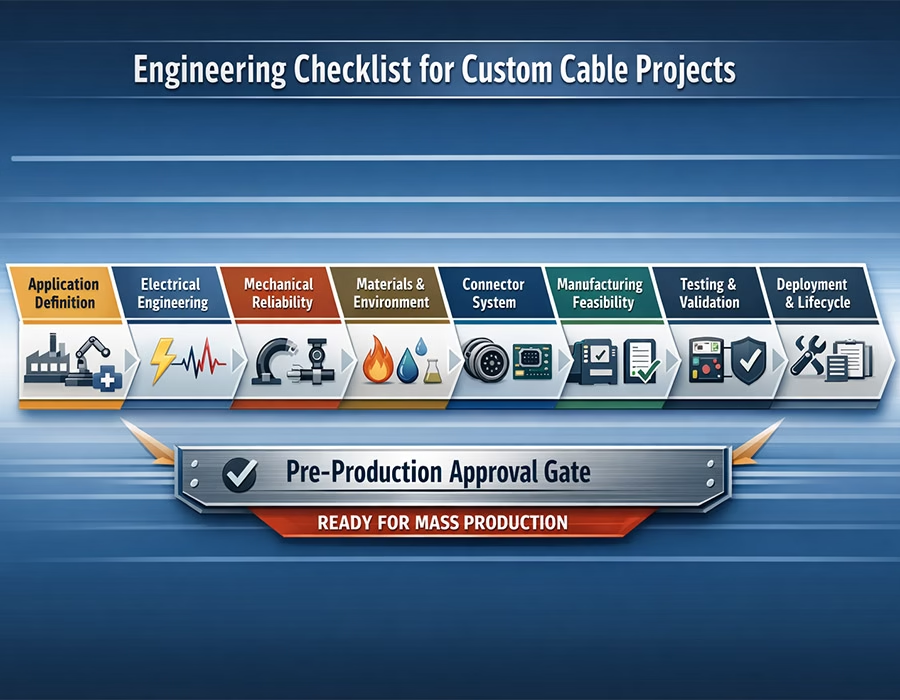
A cable assembly is never really “off the shelf.” Every custom build is an interconnect system. It directly affects electrical performance, mechanical reliability, regulatory compliance, and long-term field safety. Most failures we see don’t happen on the production floor. They happen earlier, when electrical, mechanical, or environmental requirements never get fully pinned down. This custom cable engineering checklist exists to catch those gaps early, before they reach a quote, let alone a build.
Quick answer: A solid custom cable engineering checklist covers ten areas in sequence. Those areas are application scope, electrical requirements, mechanical reliability, materials, connector design, manufacturing feasibility, testing, installation, documentation, and a final pre-production sign-off. Working through them in order, rather than jumping straight to connector selection, is what prevents the redesign cycles that eat a project’s timeline and budget.
Why This Checklist Exists
In twelve years of quoting cable assemblies, I’ve noticed one pattern. The projects that go smoothly almost always share one trait: someone answered the hard questions before cutting the first wire. The ones that don’t go smoothly usually skipped a step here. That’s rarely because the engineering was wrong — it’s because nobody wrote it down.
A checklist like this doesn’t replace engineering judgment. Instead, it makes sure judgment gets applied to every variable that matters, in the right order. This guide walks through the same structured review our team runs before quoting any custom cable assembly project.
1. Define Application and Project Boundaries
Before designing a cable, pin down its operating context. Skipping this step is the single biggest cause of mid-project scope changes.
Checklist:
- End-use application: industrial, automotive, medical, data, consumer
- Installation method: internal, external, drag chain, robotic, panel mount
- Routing path and space limitations
- Temperature and storage range
- Exposure to water, dust, UV, oils, fuels, chemicals
- Vibration and mechanical shock
- EMI/EMC sensitivity
- Regulatory compliance: UL, RoHS, REACH, ISO, IATF, medical standards
2. Electrical Engineering Requirements for the Cable Assembly
The electrical definition forms the functional core of the assembly. Get this wrong, and nothing downstream fixes it.
Checklist:
- Operating and peak voltage per conductor
- Current and conductor size (AWG/mm²)
- Signal type: power, data, RF, hybrid
- Data rate, bandwidth, or frequency range
- Shielding strategy: overall, individual, foil, braid
- Grounding requirements
- Crosstalk, attenuation, and EMI targets
- Controlled impedance where applicable
3. Mechanical and Physical Reliability
Mechanical failure remains a leading cause of field issues. It’s also the risk teams underestimate most often.
Checklist:
- Cable construction: solid vs. stranded, twisted pairs, coaxial, multi-core
- Diameter limits and bend radius
- Flex life for static vs. dynamic applications
- Tensile strength and pull resistance
- Strain relief design: boots, overmolding, clamps
- Abrasion and wear resistance
- Vibration and shock tolerance
4. Materials and Environmental Considerations
Material choice determines whether the assembly survives in the field. It’s not just about how it performs on the bench.
Checklist:
- Conductor material: bare copper, tinned, silver-plated
- Insulation: PVC, PE, XLPE, PTFE, silicone, TPE
- Jacket performance against abrasion, oil, and chemical exposure
- UV, flame, and IP-rated protection
- Environmental threats: temperature extremes, moisture, chemicals
- Regulatory compliance: RoHS, REACH, UL, CSA
5. Connector and Interconnect System Design
Connector failures are common. So treat the connector as part of the whole system, not an afterthought bolted onto a finished cable.
Checklist:
- Connector type, manufacturer, and part number
- Pin count, gender, keying, polarization
- Mating cycle rating and locking mechanism
- Contact plating, waterproofing, and heavy-duty options
- Termination method: crimp, solder, IDC
- Pinout map and wiring diagram
- Connector-side strain relief
6. Manufacturing Feasibility and DFM Review
A design that works on paper still needs to be repeatable on the line. That’s where design-for-manufacturability (DFM) review earns its keep.
Checklist:
- Process complexity: cutting, stripping, soldering, crimping, overmolding
- Automation feasibility
- Critical process control points
- Yield, traceability, and labeling risks
- Pilot run and production scalability
- Cost sensitivity to materials or labor
7. Testing, Validation, and Quality Control
Testing validates the design and the manufacturing process alike. So it belongs in the plan from day one, not bolted on at the end.
Checklist:
- Continuity and wiring verification
- Insulation resistance and hipot testing
- Impedance and TDR testing for high-speed or RF cables
- Mechanical tests: pull, flex, insertion cycles
- Environmental and aging tests
- Visual inspection against a documented standard such as IPC/WHMA-A-620
- Prototype and pilot approval before mass production
8. Installation, Deployment, and Lifecycle Considerations
Field reliability depends on how the assembly gets handled after it leaves the factory. Build quality alone doesn’t guarantee it.
Checklist:
- Pulling tension limits and handling
- Routing protection: conduits, trays, lacing
- Shield grounding execution
- Connector mating and torque standards
- Identification and labeling
- Serviceability and replacement accessibility
- On-site acceptance tests
9. Documentation, Compliance, and Lifecycle Management
Documentation turns a custom cable into a controlled engineering product. Without it, you’re left with a one-off favor nobody can reorder.
Checklist:
- Cable drawings, wiring schematics, and BOM
- Process and inspection plans
- Test reports and validation records
- Compliance documentation
- Change control and revision history
- Supply chain continuity assessment
10. Pre-Production Final Checklist
Before approving mass production, confirm every box below is checked, not just discussed.
- ☑ Application boundaries defined
- ☑ Electrical parameters frozen
- ☑ Mechanical risks reviewed
- ☑ Environmental threats addressed
- ☑ Connector system verified
- ☑ Materials validated
- ☑ Manufacturing feasibility approved
- ☑ Testing completed
- ☑ Documentation released
- ☑ Supply chain risks assessed
This final gate exists to prevent surprises. Skip it, and the surprises show up in the field instead of on the bench.
Frequently Asked Questions
What should be included in a custom cable engineering checklist?
A complete checklist covers application scope, electrical requirements, mechanical reliability, materials, connector design, manufacturing feasibility, testing, installation, documentation, and a final pre-production review. Each section catches a different category of risk. Skip one, and that risk tends to surface later, when it’s far more expensive to fix.
When should engineering review happen in a custom cable project?
As early as possible, ideally before a formal quote. Most cable assembly failures trace back to requirements that were never fully defined during the design phase. Very few trace back to mistakes on the production floor. A review at this stage costs far less than a redesign after tooling is already cut.
What standard governs cable and wire harness workmanship?
IPC/WHMA-A-620 is the industry-consensus standard for cable and wire harness assembly requirements. It covers crimped, soldered, and mechanically secured terminations. The standard also defines three product classes — general, dedicated-service, and high-performance — so acceptance criteria match how critical the application actually is.
What’s the difference between hipot testing and continuity testing?
Continuity testing confirms that each conductor connects correctly end to end, with no opens or shorts. Hipot (high-potential) testing applies a higher voltage to check insulation resistance and dielectric strength instead. Continuity testing doesn’t cover that. Most shops run both on every unit before it ships.
Why does connector selection belong earlier in the design process?
Because connector choice constrains pin count, termination method, mating cycles, and environmental sealing all at once. Select it late, after the electrical and mechanical requirements are already locked in, and you’re often looking at a redesign instead of a simple part swap.
How does a DFM review reduce project cost?
A design-for-manufacturability review catches process complexity, automation limits, and labor-intensive steps early. Fixing those issues on paper costs a fraction of what it costs to rework tooling later. It’s even more expensive to rerun a pilot batch after production has already started.
Conclusion
Treat a custom cable assembly as a complete system, not a component ordered off a catalog page. That mindset is what separates projects that ship on schedule from ones that don’t. This checklist exists to organize and verify one thing: that the design, materials, and mechanical and electrical decisions actually line up before production starts. At Romtronic, every custom cable assembly project begins with an engineering review, not just a price quote. The trust that matters gets built during the engineering phase, well before the first unit comes off the line.
References
- IPC and WHMA — IPC/WHMA-A-620: Requirements and Acceptance for Cable and Wire Harness Assemblies — the industry-consensus workmanship and inspection standard referenced in the testing section above.
- Underwriters Laboratories — UL Certification Marks — the North American safety certification referenced throughout the compliance checklist.
- European Commission — RoHS Directive and REACH Regulation — the material and substance compliance frameworks referenced above.
Ready to start with an engineering review instead of just a quote? Talk to Romtronic’s engineering team about your custom cable assembly project.
.avif)
Sam Wu is the Marketing Manager at Romtronic, holding a degree in Mechatronics. With 12 years of experience in sales within the electronic wiring harness industry, he manages marketing efforts across Europe. An expert in cable assembly, wiring harnesses, and advanced connectivity solutions, Sam simplifies complex technologies, offering clear, actionable advice to help you confidently navigate your electrical projects.