Hey there, fellow engineer. I’ve been in the manufacturing trenches for nearly 12 years at Romtronic, and I’ll tell you a secret: 30% of cable RFQs are returned or delayed due to missing info.
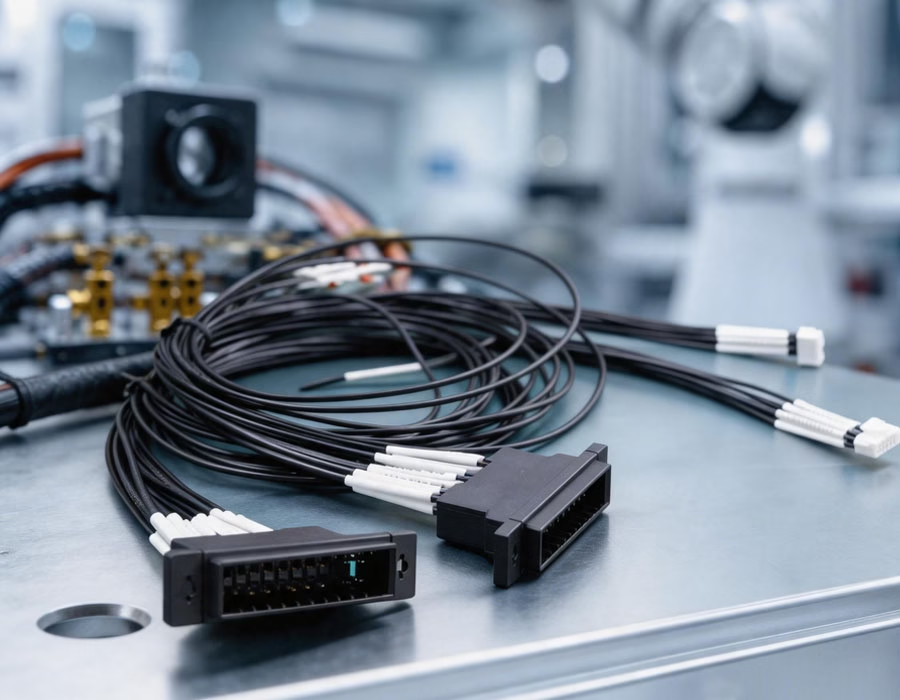
Each round-trip email adds 1-2 weeks to your project timeline. Even worse, incomplete specs lead to “Guesswork Pricing.” We recently saw a case where three suppliers quoted the same robot cable at $85, $142, and $210. Why? Because the RFQ missed the flex life and torsion specs, forcing each vendor to make a wild guess.
To help you get a “Right-First-Time” quote, here is our battle-tested, supplier-proof checklist.
1. The Engineering “Must-Haves.”
A clear drawing is your “Source of Truth.” If this is missing, the quote is just a guess.
- Detailed Drawings & CAD: Include dimensions, tolerances, and cable exit directions.
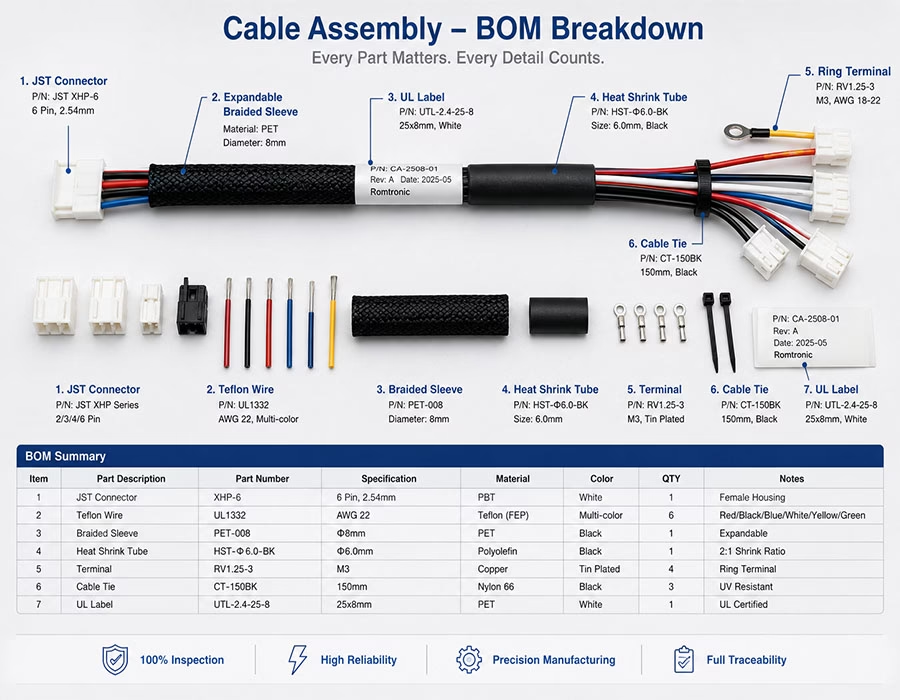
- The BOM (Bill of Materials): Don’t just say “USB connector.” Give us the Brand (JST, Molex, TE) and exact Part Number.
- Wire Specs: AWG size, conductor type (tinned copper?), and insulation material.
- The Romtronic Edge: If your specified connector has a 20-week lead time, our team will proactively suggest vetted equivalents to keep your project moving.
2. The “Trauma” Test: Environment & Motion
In robotics and industrial automation, the environment kills cables. We need to know:
- Dynamic Flex Life: How many million cycles? What is the bend radius?
- Torsion Requirements: Will the cable twist? (e.g., ±180°/m for a robot wrist).
- Operating “Hell”: Is it exposed to oil, UV, or harsh chemicals? Does it need an IP67 rating?
- Compliance: Do you need IATF 16949 for automotive or ISO 13485 for medical?
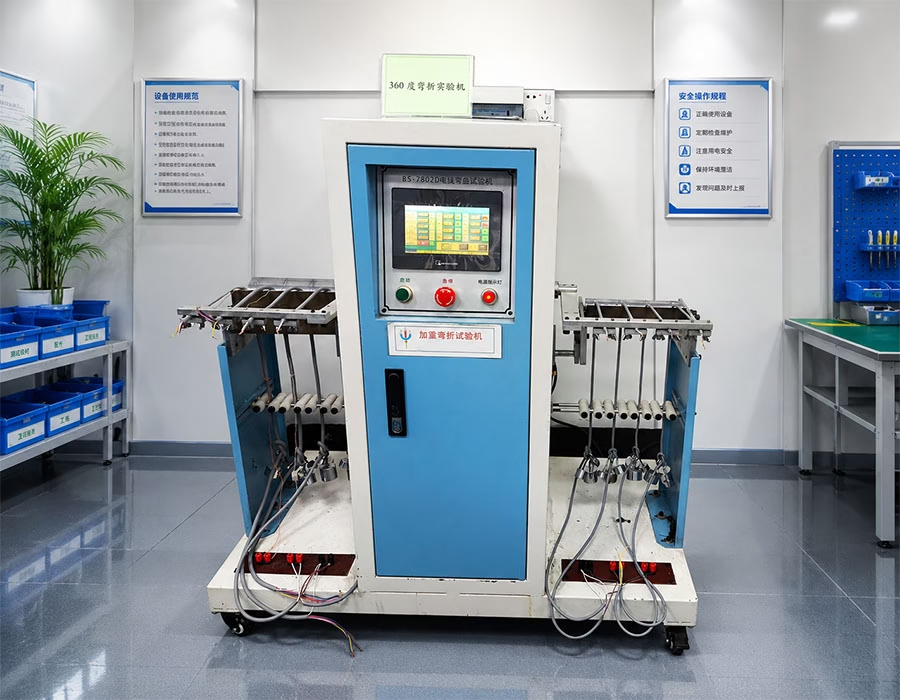
⚡ Looking for high-flex industrial USB cables that withstand millions of cycles?
Romtronic provides drag-chain rated USB solutions engineered for robotics, automation equipment, and continuous-motion environments — featuring reinforced jackets, industrial-grade shielding, and reliable signal integrity under dynamic flex conditions.
👉 Explore our Custom USB Cable solutions →
3. Testing: Define Your “OK.”
Testing is the most forgotten part of an RFQ. Without it, you’re at the mercy of the supplier’s “default” quality.
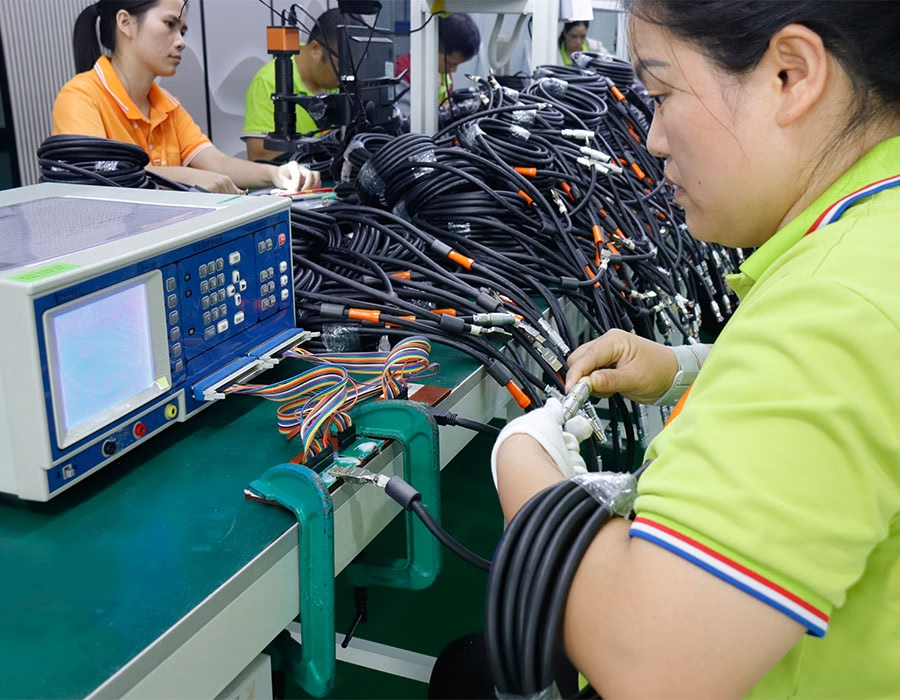
- Electrical: Continuity, Hi-Pot (e.g., 1500V DC), and Insulation Resistance.
- Mechanical: Pull-force testing (Newtons) and crimp cross-section analysis.
- Our Standards: At Romtronic, we follow the IPC/WHMA-A-620 Class 3 standard and implement a 300% Inspection policy to ensure zero field failures.
4. Commercial Reality: Volume & Logistics
Price is a function of process. Be transparent with your numbers.
- The Quantity Ladder: Ask for tiered pricing (e.g., 10 / 100 / 1000 pcs).
- EAU (Estimated Annual Usage): This helps us value-engineer your project for long-term savings.
- Timeline: When do you actually need the prototype?
💡 Pro Tip: Make “Assumptions” Transparent
Add this sentence to your next RFQ: “Please list all assumptions made for this quote. The buyer’s understanding will interpret any undisclosed assumptions.”
This one sentence prevents 90% of post-order disputes and forces the supplier to reveal hidden risks.
Why Romtronic?
We don’t just “bid” on your drawings; we Value-Engineer them. As HMLV (High-Mix Low-Volume) experts, we treat your 10-piece prototype with the same engineering rigor as a 10,000-piece production run.
Stop the back-and-forth. Let’s build something reliable.
.avif)
Sam Wu is the Marketing Manager at Romtronic, holding a degree in Mechatronics. With 12 years of experience in sales within the electronic wiring harness industry, he manages marketing efforts across Europe. An expert in cable assembly, wiring harnesses, and advanced connectivity solutions, Sam simplifies complex technologies, offering clear, actionable advice to help you confidently navigate your electrical projects.