 Premier Manufacturer

The 4-pin connectors used in electrical systems are found throughout automotive, computer, drone, industrial sensor, and consumer electronics applications. Four pins provide a robust, flexible connection point for power, signals, or both, enabling reliable electrical wiring systems across multiple industries.
Common Types & Where They’re Used
Automotive & EFI Systems
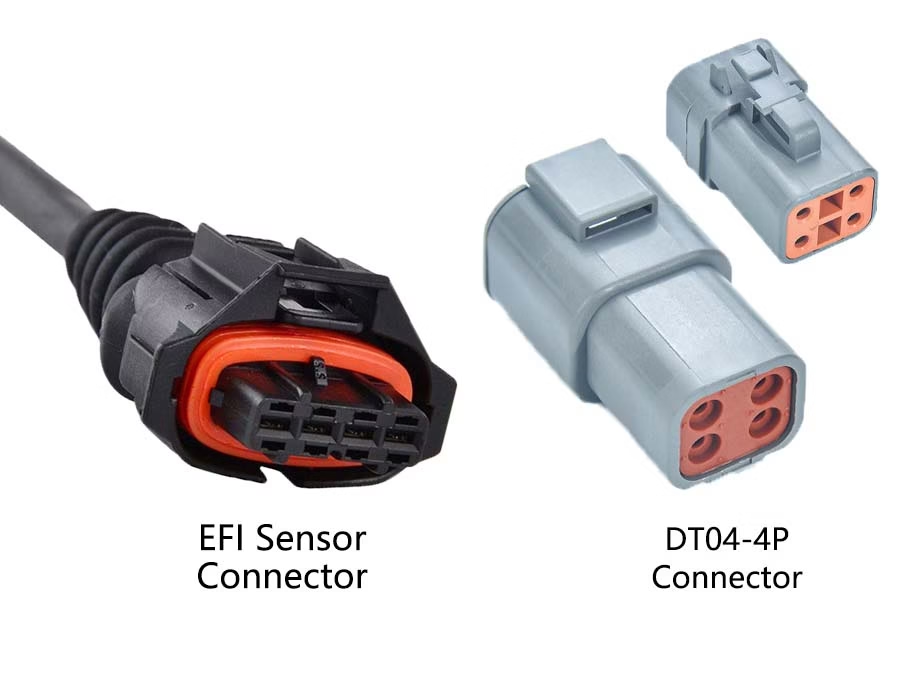
Rugged connectors, such as the Deutsche DT04-4P series and EFI Sensor connectors, are designed to withstand extreme heat and environmental vibration, making them ideal for use with engine electronics, including ignition coils, fuel injectors, and MAP/MAF sensors.
Computer Hardware
Two 4-pin connectors remain common in PC builds:
- Molex 8981 / 4-pin peripheral – powers legacy HDDs, case fans, and LED kits
- 4-pin or 4+4 EPS CPU connector – supplies stable CPU power

Hobby Electronics, Drones & Robotics
Lightweight 4-pin connectors such as JST XH, JST PH, and DuPont headers are commonly used on servos, flight controllers, GPS modules, and UART communication lines.
👉 See JST & wire harness options: Custom JST Cable
Industrial & Waterproof Applications
Industrial systems rely on M8/M12 circular connectors with IP67/IP68 sealing for automation sensors, motors, and control systems.
👉 Browse M8/M12 cable assemblies: Customized M8 M12 M16 Cable
Trailer & Vehicle Lighting
Standard 4-pole connectors handle brake lights, turn signals, and tail lights for trailers and towed equipment.
👉 Browse trailer wiring harness: Custom Trailer Wire Harness

Barrier Strips / Terminal Blocks
Some equipment uses 4-position screw terminals for simple, tool-friendly wire termination.

How to Identify a 4-Pin Connector
Look at these features to tell them apart:
- Shape: circular, rectangular, D-shaped, or screw-block
- Locking style: snap-lock, friction-fit, or threaded waterproof coupling
- Mounting: panel-mount vs. in-line cable connectors
- Termination: crimp pins, solder lugs, or screw terminals
Why Four Pins?
Four contacts combine power (ground) with two signal lines (dual signals), providing both power and communication in a single connector (mixing power and comms). They provide a balance between automotive, industrial, and consumer electronics.
Conclusion
4-pin connectors provide dependable, adaptable, and robust mechanical security for a wide range of applications, including wiring sensors/power supplies, powering CPUs, trailer wiring, and building robots. The 4-pin connector style you select will depend on environmental conditions, sealing requirements, and the level of connection security appropriate for your situation.
FAQs
A: 4-pin electrical connectors are utilized to transfer power (or current), signals, or both to various types of electronic devices and systems (e.g., automotive electronic fuel injection systems (EFI), computers, drones, and sensors).
A: Many different industries utilize 4-pin connectors, including automotive electronics, PCs (Personal Computers), hobby robotics, drones, trailers, and industrial automation systems.
A: You can determine the type of 4-pin connector by looking at its physical characteristics, such as the shape, locking style, mounting option, and termination options, which include crimp, solder, or screw terminals.
.avif)
Sam Wu is the Marketing Manager at Romtronic, holding a degree in Mechatronics. With 12 years of experience in sales within the electronic wiring harness industry, he manages marketing efforts across Europe. An expert in cable assembly, wiring harnesses, and advanced connectivity solutions, Sam simplifies complex technologies, offering clear, actionable advice to help you confidently navigate your electrical projects.

