Premier Manufacturer

Ever needed to connect your car’s OBD-II port to a laptop? A custom OBD2-to-USB cable makes it easy. These cables connect the car’s 16-pin (J1962) diagnostics port to a computer’s USB port, allowing you to read engine codes or log data on a PC. Under the hood, they usually use an ELM327 interface chip that converts the car’s data to USB serial format. By choosing a custom cable, you can pick the exact length and connector type (USB-A, USB-C, etc.) you need, along with extra shielding or strain relief for reliability.
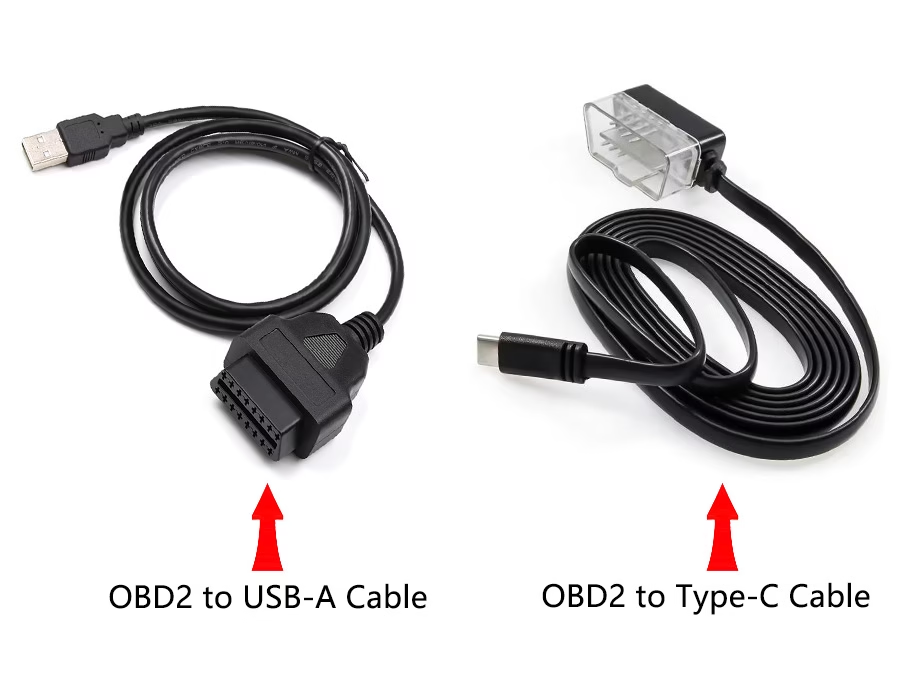
Modern OBD-II adapters let your car’s onboard computer talk to a laptop or tablet. They often have the standard 16-pin OBD-II plug on one end and a USB plug (Type-A or Type-C) on the other. Unlike cheap generic leads, a custom cable can be the perfect length and use high-quality materials. For example, a good cable uses corrosion-resistant (gold or tin) pins and wires for all 16 pins, so it works with any car and scanner. It will also have thick shielding and a durable jacket to resist heat, oil, and bending, reducing electrical noise and protecting the car’s port.
Why Use a Custom OBD2 Cable?
If you’re a DIYer or mechanic, custom OBD cables solve real problems. Off-the-shelf cables are often too short or lack durability. Using an extension or custom cable keeps your diagnostic tool in a convenient spot and protects the car’s OBD port from wear.
Plus, note that many aftermarket tuning kits actually use proprietary cables, so a generic lead won’t work with those systems. In other words, if a generic cable won’t connect, you might need a custom or branded cable for that particular software.
Looking for OBD2-to-USB Cables Built to Your Specs?
Romtronic designs custom OBD2-to-USB cable assemblies with robust shielding, corrosion-resistant connectors, and strain relief—ideal for professional diagnostics, fleet management, and harsh-environment use.
👉 Let’s talk custom diagnostic cable solutions →
Common Use Cases
- Vehicle Diagnostics: Mechanics and DIYers use OBD2-to-USB cables to connect PCs or scan tools to the car. This lets you read and clear trouble codes, turn off the check-engine light, and view live sensor data (like speed or fuel trim) in real time.
- Data Logging & Tuning: These cables are key for performance tuning and logging. For example, logging fuel economy or horsepower data over a drive requires streaming data through the cable to the software. A properly shielded cable prevents signal errors during fast data recording.
- DIY Projects: Hobbyists often build custom OBD readers. For instance, you can hook an Arduino or Raspberry Pi (with an ELM327 board) to read engine RPM, coolant temperature, or GPS data.
Choosing Custom Options
When ordering custom cables, consider key specifications. Length is critical—too long will cause signal attenuation. Recommendations: Approximately 1–3 feet for in-car use, 3–10 feet for garage/workbench use, and over 10 feet if you need to move around in a truck or repair pit.
You should also pick the USB plug type: most PCs use USB-A, but you can get USB-C or even micro-USB ends for newer devices. For reliability, choose a cable that has all 16 OBD pins wired (so it truly supports every data line) and plated pins to avoid corrosion. A braided or thick rubber jacket, plus a good strain-relief at each end, will keep the cable lasting through garage work.
Consider the typical cable lengths and their uses:
| Cable Length (ft) | Best Use Case |
|---|---|
| 1–3 | Quick, front-seat diagnostics |
| 3–10 | Workshop or garage work |
| Over 10 | Large vehicles or wide workspaces |
When you customize, you can also choose features like LED indicators or switches (some cables have an ACC on/off switch for dashcams). Just make sure the final design matches your car’s voltage (12V vs 24V) and that the USB side matches your devices.
Ready to Build High-Performance OBD2-to-USB Cables?
Romtronic offers fully custom assemblies tailored to your technical requirements—including connector type, wiring harness, and rugged construction to ensure reliability and compatibility.
👉 Get expert help designing your ideal diagnostics cable →
Conclusion
Custom OBD2-to-USB cables give DIYers and mechanics flexibility. By tailoring the cable length, connector type, and build quality, you get a setup that fits your exact needs. The correct cable lets you reliably bridge your car’s OBD-II port to any computer or device. Then you can dive into diagnostics, tuning, or your data projects with confidence, knowing the cable won’t be the weak link.
.avif)
Sam Wu is the Marketing Manager at Romtronic, holding a degree in Mechatronics. With 12 years of experience in sales within the electronic wiring harness industry, he manages marketing efforts across Europe. An expert in cable assembly, wiring harnesses, and advanced connectivity solutions, Sam simplifies complex technologies, offering clear, actionable advice to help you confidently navigate your electrical projects.