LED Polarity: Why It Matters
LEDs (Light Emitting Diodes) are a bit picky compared to regular old light bulbs. They have positive and negative sides and care about how you wire them.
Importance of Correct Polarity
To get your LED to shine bright, you need to hook it up correctly:
- Positive Side (Anode): The longer leg connects to the power source’s positive terminal.
- Negative Side (Cathode): The shorter leg connects to the negative terminal.
If you mix up the wires, your LED won’t work, and you might even damage it if you’re not careful.
Wiring LED Lights: The Right Way
Series Circuit
Think of a series circuit like a chain of Christmas lights:
- Current Consistency: Each LED gets the same current, shining equally bright.
- Voltage Sum: Add up the forward voltages of all the LEDs to get the total voltage needed.
- Failure Impact: One LED goes out, and they all go out.
- More straightforward wiring: It is simple to set up and troubleshoot.
Parallel Circuit
A parallel circuit is more like branches on a tree:
- Voltage Consistency: Each LED gets the same voltage.
- Current Distribution: The total current is split among the LEDs.
- Independent Operation: One LED dies, and the rest keep shining.
- Current Hogging: Balancing the current can be tricky, risking overheating.
Series/Parallel Circuit
Combining series and parallel can be a sweet spot:
- Voltage and Current Management: Efficiently distributes voltage and current.
- Balancing Loads: Helps prevent overloading individual LEDs.
Practical Tips for LED Wiring
- Correct Polarity: Always check your positive and negative connections.
- Power Supply Matching: Use a power supply that matches your LLED’s age and current needs.
- Proper Connectors: Use the right connectors for a secure setup.
- Testing: Test everything before finalizing to avoid headaches later.
Correct wiring ensures optimal performance and longevity in professional setups like stage or large-scale indoor LED screens. Missteps can lead to dimming, uneven brightness, or damage to LEDs.
Effects of Enclosed Fixtures on LED Bulbs
Putting LED bulbs in enclosed fixtures can mess with their performance and lifespan. Here’s what you need to know based on real-life experiences:
Heat Generation and Dissipation
- Heat Comparison: LEDs generate less heat than incandescent bulbs. For example, a 9-watt LED (similar to a 60-watt incandescent) produces much less heat.
- Enclosed Fixtures: Heat can build up in enclosed fixtures and damage the LED electronics, cutting their life short.
Lifespan Considerations
- Enclosed vs. Vented Fixtures: LED bulbs in enclosed fixtures may not last as long as those in vented ones. Constant high temperatures can reduce their lifespan from years to just months.
- Quality and Usage: Higher-quality bulbs might hold up better, but heat buildup will eventually get to them.
Summary
Knowing how to wire LEDs correctly and understanding the effects of enclosed fixtures on their lifespan can save you a lot of trouble. Whether wiring in series, parallel or a mix of both, following these tips will help you get the best performance and longevity from your LED lights. So, next time you set up your LEDs, remember: it’s about getting the connections right and keeping things cool!
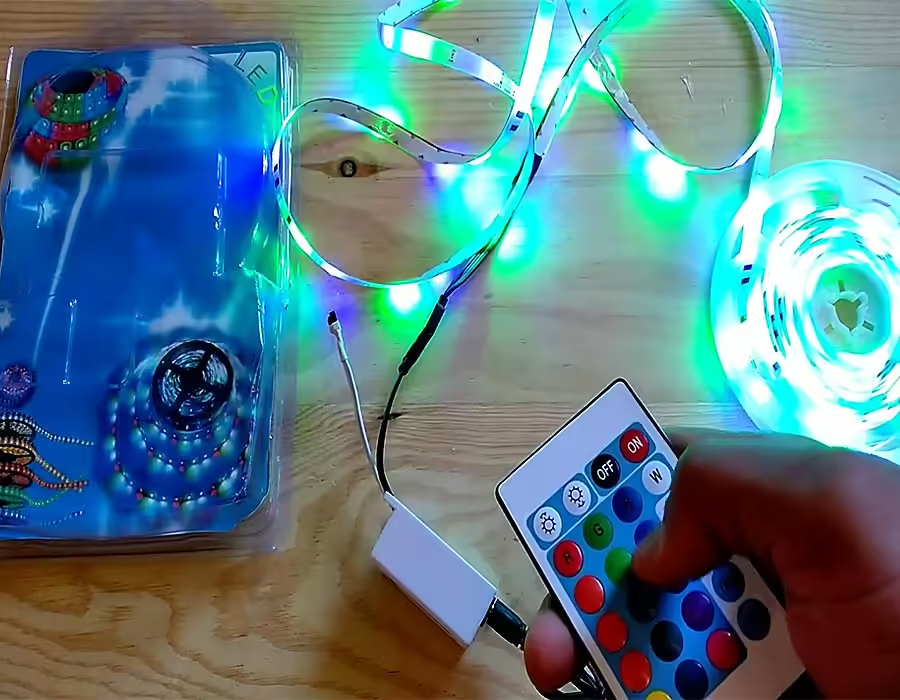
You may also want to know about Expert Solutions for Lighting Wire Harnesses and Cable Assemblies.
.avif)
Sam Wu is the Marketing Manager at Romtronic, holding a degree in Mechatronics. With 12 years of experience in sales within the electronic wiring harness industry, he manages marketing efforts across Europe. An expert in cable assembly, wiring harnesses, and advanced connectivity solutions, Sam simplifies complex technologies, offering clear, actionable advice to help you confidently navigate your electrical projects.