Premier Manufacturer

When choosing a cable assembly manufacturer, OEMs, system integrators, and industrial buyers face a critical decision. Manufacturers with the right qualifications will do more than provide cables; they will reduce engineering risk, increase long-term product reliability, and deliver consistent product quality.
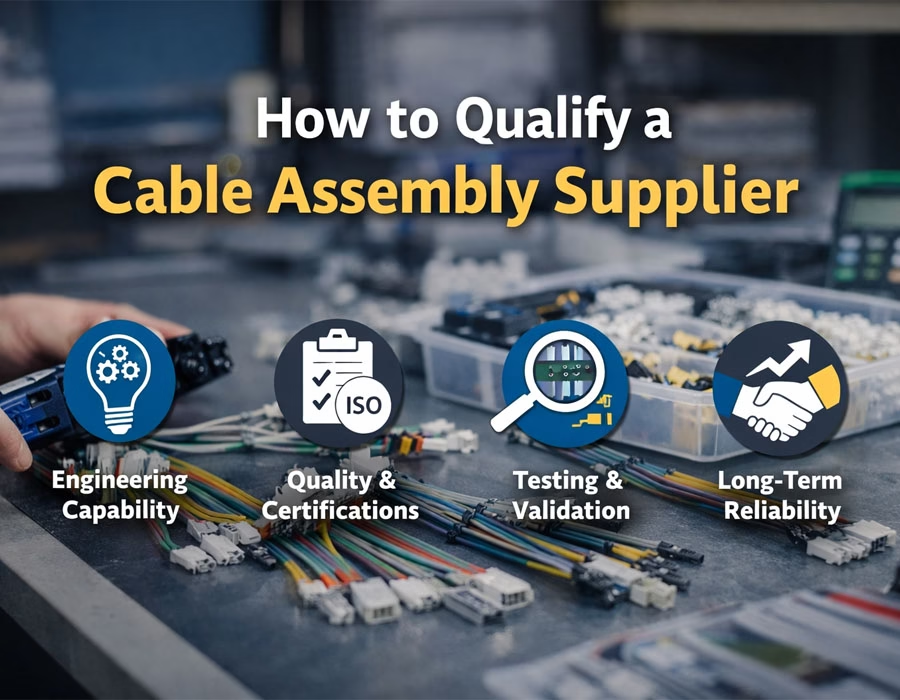
His guide outlines a practical, engineering-driven approach to qualifying a cable assembly supplier before committing to mass production.
1. Engineering Capability Comes First
A reliable cable assembly supplier should demonstrate strong engineering support, not just manufacturing capacity. This includes:
- Ability to review drawings, schematics, and BOMs
- Experience with custom cable designs and complex assemblies
- Clear understanding of signal integrity, EMI shielding, and material selection
Suppliers experienced in custom cable assembly and wire harness manufacturing can often identify potential design or material issues early, helping prevent costly redesigns later.
2. Manufacturing Process and Consistency
Beyond equipment lists, focus on how consistently the supplier controls their processes:
- Defined work instructions and assembly standards
- Controlled crimping, soldering, and overmolding processes
- Process traceability from raw materials to finished assemblies
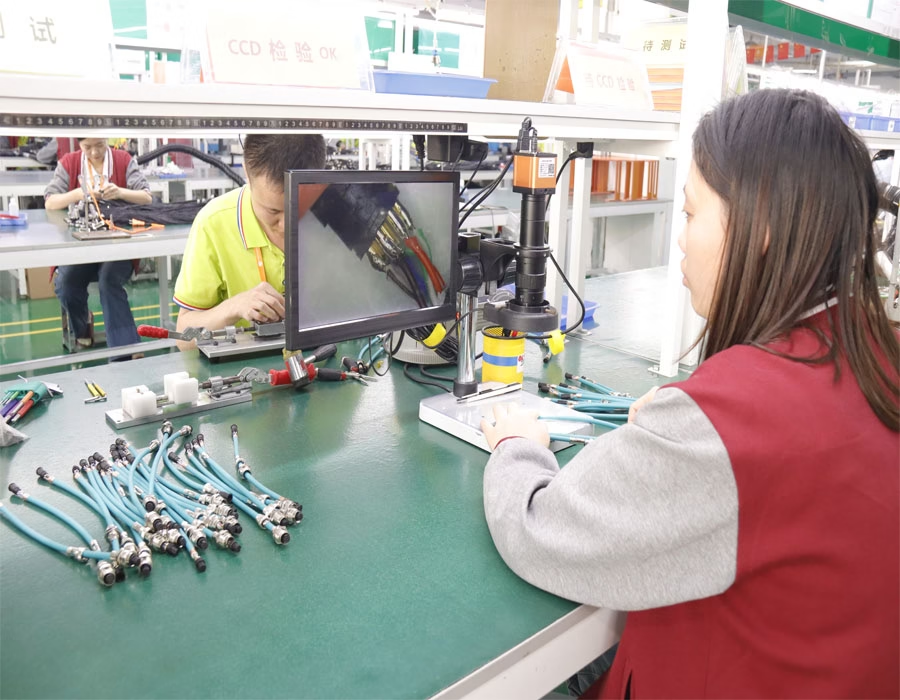
Consistency is often more important than automation level, especially for customized or low- to mid-volume projects.
3. Quality Management and Certifications
A qualified cable assembly supplier should operate under a formal quality management system. Common indicators include:
- ISO 9001 or IATF 16949 certification
- Incoming material inspection and lot control
- In-process and final quality checks
For relevant certifications, please refer to: Our Certifications and Qualifications
Certification alone is not enough — ask how quality procedures are actually implemented on the production floor.
4. Testing and Validation Capability
Testing capability directly impacts product reliability. A serious supplier should be able to perform:
- Continuity and short testing
- Hi-Pot and insulation resistance tests
- Pull force and mechanical durability tests
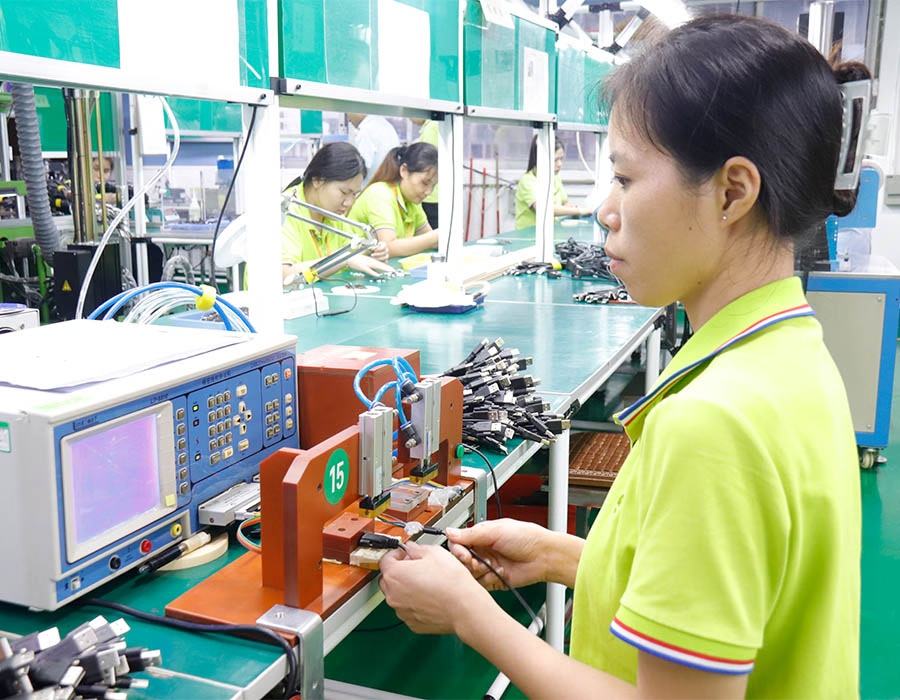
For critical applications, suppliers should also support customer-defined testing requirements.
5. Supply Chain Control and Material Traceability
Material quality directly affects cable performance and lifespan. A qualified supplier should provide:
- Stable sourcing for connectors, terminals, and cables
- Material traceability for key components
- Apparent alternatives when components face shortages
This is especially important for long-term programs and regulated industries.
6. Communication and Project Management
Effective communication often separates good suppliers from problematic ones. Look for suppliers who:
- Respond clearly and consistently
- Provide realistic lead times and timelines
- Proactively flag risks or design concerns
Strong project management reduces delays and misalignment during development and production.
7. Scalability and Long-Term Partnership Potential
Qualifications should consider not just current needs, but future growth. A capable supplier should be able to:
- Scale production volumes when required
- Maintain quality consistency as demand increases
- Support product revisions and lifecycle changes
Long-term partnerships reduce onboarding costs and supply chain instability.
Conclusion
Purchasing a cable assembly requires not only a reasonable price or production capacity, but also careful evaluation of a manufacturer’s engineering capabilities and quality systems, as well as their ability to manufacture products and deliver consistent long-term reliability.
A qualified supplier is expected to demonstrate strong design support, comply with international standards, have robust testing processes in place, and be transparent in their communication throughout the project lifecycle. It is equally important that they can grow with your company while maintaining consistent quality and delivery performance.
By applying a structured qualification approach, OEMs and system integrators can reduce supply chain risk, improve product reliability, and build long-term partnerships that support both technical and commercial success.
FAQs
Engineering capability and process consistency are more critical than price alone.
No. Certifications are a baseline, but real process control and testing matter more.
Continuity, Hi-Pot, insulation resistance, and mechanical pull testing are standard.
It ensures consistent quality and reduces risk from component changes or shortages.
Yes. A supplier must support future volume growth without compromising quality.
.avif)
Sam Wu is the Marketing Manager at Romtronic, holding a degree in Mechatronics. With 12 years of experience in sales within the electronic wiring harness industry, he manages marketing efforts across Europe. An expert in cable assembly, wiring harnesses, and advanced connectivity solutions, Sam simplifies complex technologies, offering clear, actionable advice to help you confidently navigate your electrical projects.