Premier Manufacturer

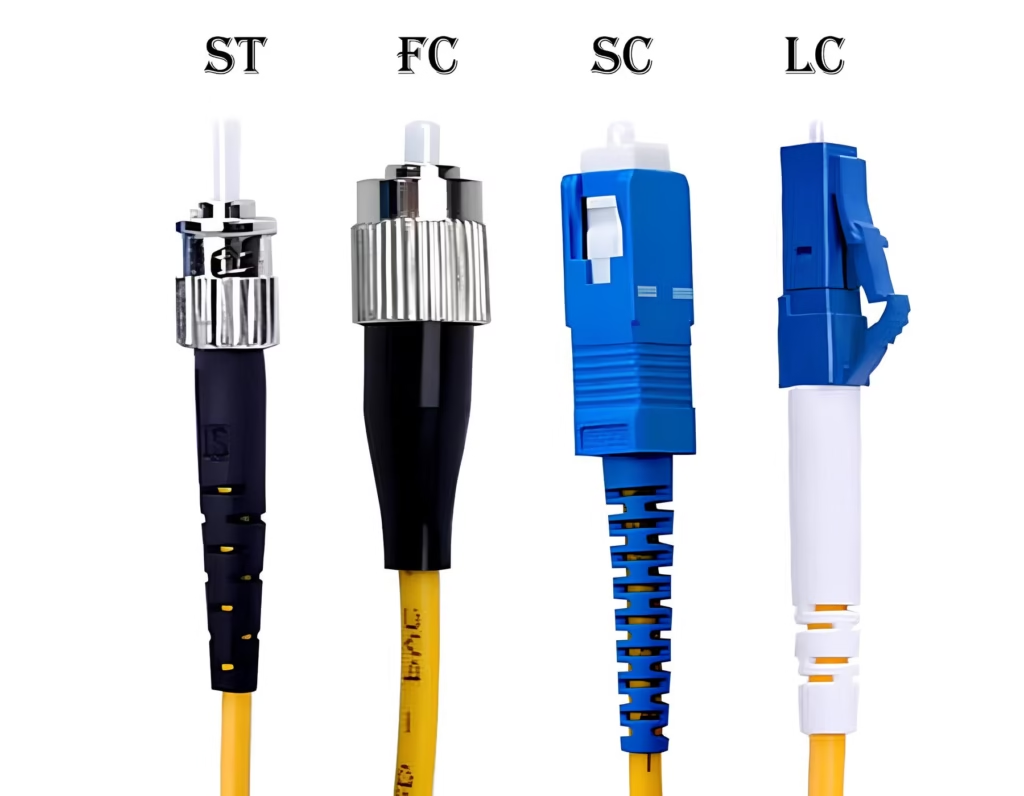
While the small size of fiber optic connectors does not indicate they play a minor role, the type of connector you use affects the overall efficiency with which light travels across the fiber network. Of the more than a dozen types of fiber-optic connectors available, the four most commonly used today are LC, SC, FC, and ST. In addition to serving the same general function, the four connectors differ in size, locking mechanism, and best applications.
The following guide systematically describes each connector type to help you make an informed selection for the connector that best suits your fiber-optic networking system.
1. What Does a Fiber Optic Connector Do?
Optical fiber connectors are used to align two optical fiber ends to maximize light transmission without significant signal loss. Regarding the optical fiber connector, three parts are critical:
- Ferrule (1.25mm or 2.5mm ceramic pin holding the fiber)
- Locking mechanism (push-pull, latch, threaded, bayonet)
- End-face quality (affects insertion loss and return loss)
Essentially, a quality connector will provide a stable signal, fewer transmission errors, and less need for periodic maintenance.
2. LC, SC, FC, and ST Connectors Explained
LC Connector — Lucent Connector
- Ferrule size: 1.25 mm
- Locking mechanism: Push-pull latch similar to an RJ-style clip
- Why it’s popular: Small, lightweight, ideal for high-density panels
- Typical loss: Low insertion loss, excellent return loss
- Where it’s used:
Data centers, SFP modules, high-density switches, and internal equipment wiring
Best for: High-density installations where port count matters.
SC Connector — Subscriber Connector
- Ferrule size: 2.5 mm
- Locking mechanism: Simple push-pull snap-in
- Why it’s popular: Very easy to insert/remove; widely standardized
- Typical loss: Stable, low insertion loss; high return loss
- Where it’s used:
FTTH, enterprise networks, telecom, cable TV systems
Best for: General-purpose networking with frequent plug-and-play.
FC Connector — Ferrule Connector
- Ferrule size: 2.5 mm
- Locking mechanism: Screw-on threaded connection
- Why it’s special: Extremely secure and vibration-resistant
- Typical loss: Slightly higher than LC/SC but highly stable
- Where it’s used:
Industrial networks, test equipment, lab environments, telecom core
Best for: High-precision or high-vibration environments.
ST Connector — Straight Tip
- Ferrule size: 2.5 mm
- Locking mechanism: Bayonet-style (twist-and-lock)
- Why it exists: Simple, fast locking for legacy systems
- Typical loss: Moderate; suitable for budget applications
- Where it’s used:
Older LAN systems, building networks, and industrial Ethernet
Best for: Legacy or low-cost systems still using multimode fiber.
3. Side-by-Side Comparison
Feature Comparison Table
| Feature | LC | SC | FC | ST |
|---|---|---|---|---|
| Ferrule Size | 1.25 mm | 2.5 mm | 2.5 mm | 2.5 mm |
| Locking Mechanism | Latch (RJ-style) | Push-pull snap | Threaded | Bayonet |
| Density | ★★★★★ | ★★★★☆ | ★★☆☆☆ | ★★☆☆☆ |
| Vibration Resistance | ★★★☆☆ | ★★★☆☆ | ★★★★★ | ★★★☆☆ |
| Typical Use | Data centers | FTTH, enterprise | Labs, telecom core | Legacy LAN, industrial |
4. How to Choose: Practical Recommendations
- High-density racks or switches → LC
Small ferrule = twice the port density. - Plug-and-play, everyday networks → SC
The easiest and most user-friendly connector. - High vibration, precise alignment → FC
Threaded design eliminates accidental disconnects. - Older building networks → ST
Still common in multimode legacy systems.
5. FAQ: Common Questions
Q1: How do I clean fiber connectors?
A fiber-cleaning pen or alcohol-soaked lint-free wipes can be used to clean the fiber connector ends. Do not touch the ferrule ends of the optical connectors with your fingers.
Q2: How do I extend the connector’s lifespan?
Avoid plugging/unplugging connectors unless necessary to eliminate future malfunctioning. Keep all unused fiber connectors capped and store them away from dust.
Q3: Are these connectors still evolving?
Yes. High-density and low-loss designs continue to improve, especially for cloud, IoT, and 5G applications.
6. Conclusion
LC, SC, FC, and ST connectors each have distinct applications and contexts where they excel. Still, you must consider several variables when selecting the best-suited connector to your environment (density, stability, budget, and the system’s age). LC is dominating today’s high-density data networks, SC is still the most widely used connector for telecom worldwide, FC is frequently used in applications requiring high precision, and ST is typically used to support older Multimode installations.
Selecting the right connector will lead to much greater performance and will make it easier to maintain over time.
.avif)
Alex Wang is the Marketing Manager at Romtronic, with a degree in International Business and over seven years of experience in the electronic cable and wire harness industry. He leads marketing efforts across North and South America, combining deep industry knowledge with strong sales experience.
In addition to overseeing global marketing strategy, Alex is also responsible for content development and editorial coordination, ensuring that Romtronic’s messaging remains clear, consistent, and engaging. His strength in market analysis and customer-focused approach helps clients make more informed purchasing and sales decisions.