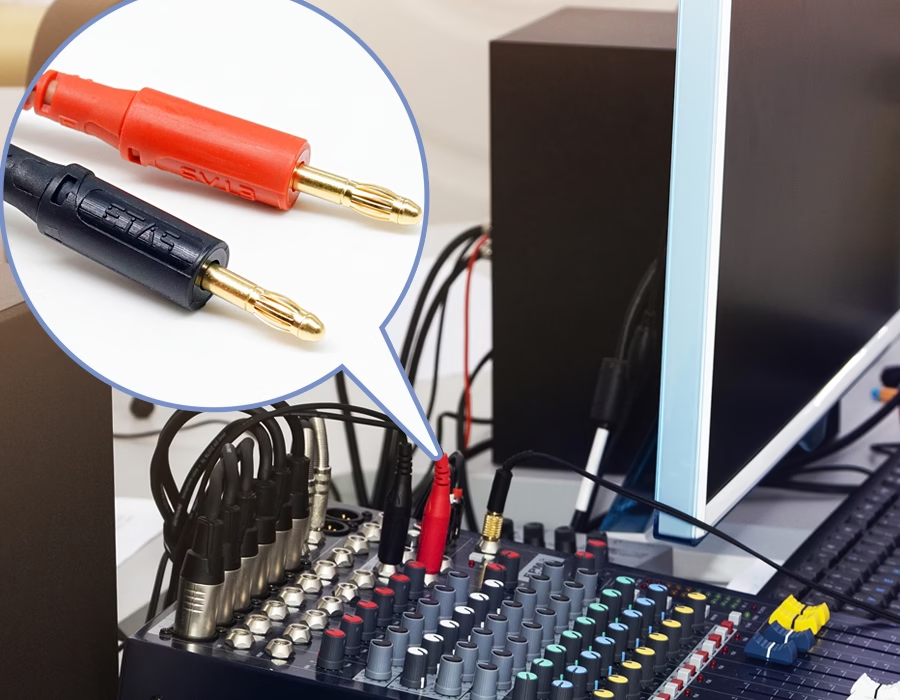
Introduction to Audio TRS Interface
A TRS (Tip-Ring-Sleeve) cable is a standard audio connector used widely in various audio devices. The name “T” S” is derived from the three parts of the connector:
- Tip (T): Carries one signal.
- Ring (R): Carries a second signal.
- Sleeve (S): Acts as the ground.
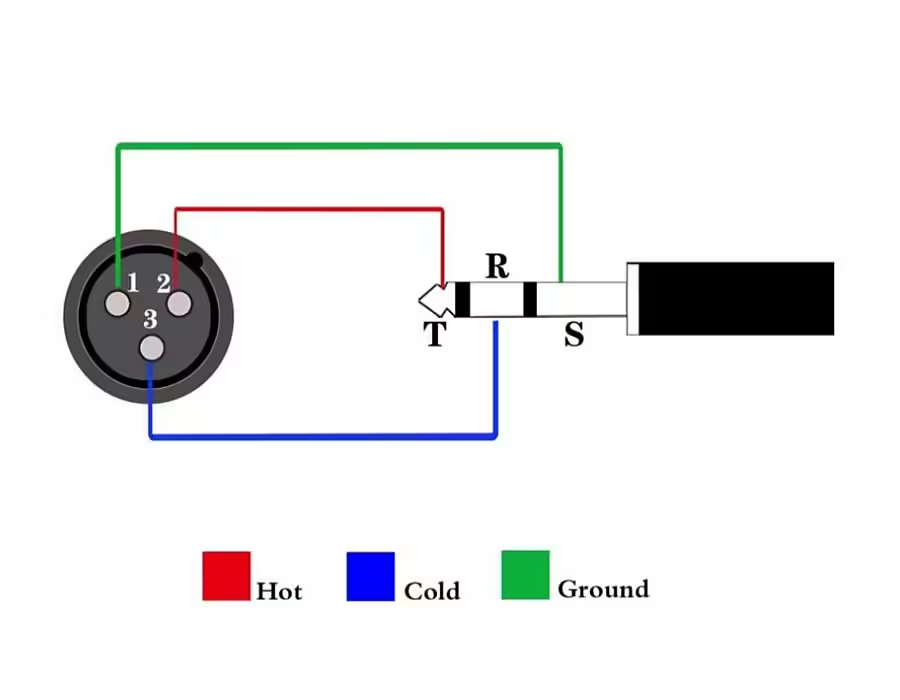
The TRS plug is cylindrical and has its contacts separated by insulating material. TRS cables come in three main sizes:
- 1/4 inch (6.35 mm)
- 1/8 inch (3.5 mm)
- 3/32 inch (2.5 mm)
Each size caters to different devices:
- 1/4 inch (6.35 mm): Commonly used in professional audio equipment for balanced or unbalanced stereo signal transmission.
- 1/8 inch (3.5 mm): The most common for consumer electronics such as headphones, smartphones, and laptops.
- 3/32 inch (2.5 mm): Used in older cell phones and portable devices with limited space.
Types of TRS Interfaces
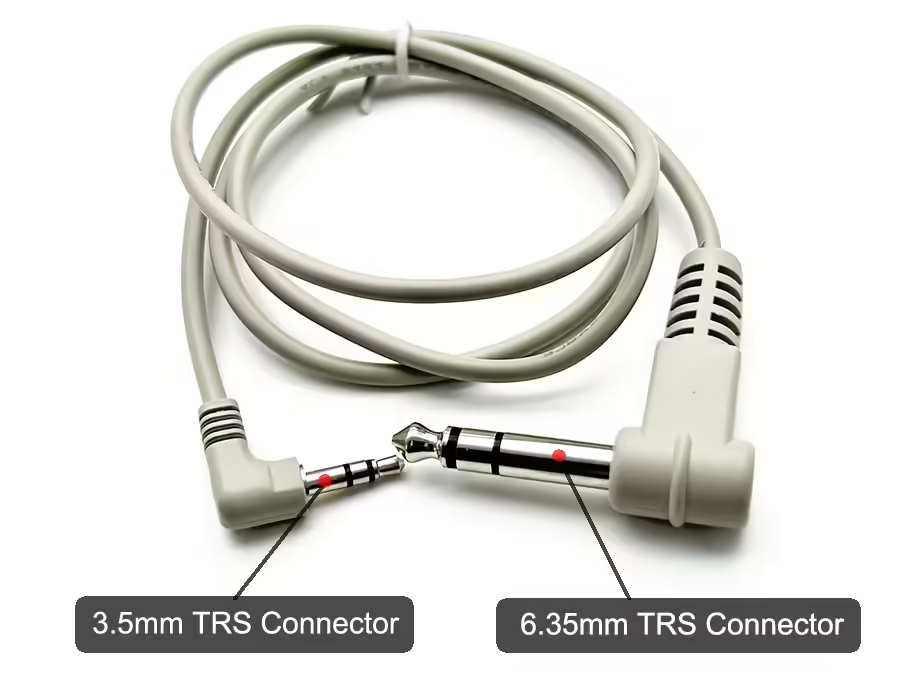
3.5mm TRS Connector (Small Three-Core)
The 3.5mm TRS connector, often known as the small three-core or stereo connector, is extensively used in sound cards, MP3 players, and mobile phones. It supports stereo (dual-channel: left and right) input and output functions. For multi-channel audio systems like 5.1 or 7.1, multiple 3.5mm TRS connectors are required to connect all channels.
6.35mm TRS Connector (Large Three-Core)
The 6.35mm TRS connector is typically used in professional audio settings. It supports balanced signal transmission, which provides a high signal-to-noise ratio and excellent immunity to interference. The balanced TRS connectors are more costly than unbalanced ones, making them familiar in high-grade equipment.
Comparison with TS and TRRS Connectors
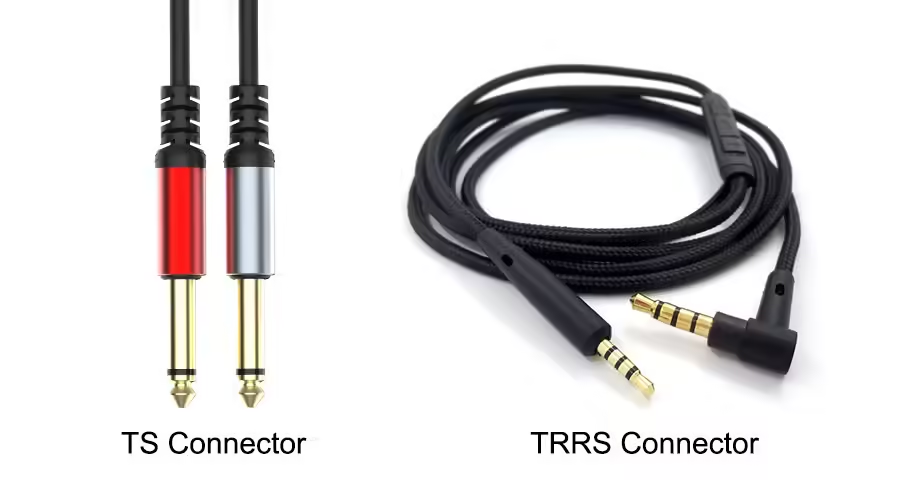
- TS (Tip-Sleeve): Used for mono signals, similar to TRS but without the ring. It is common in instrument cables like those for guitars.
- TRRS (Tip-Ring-Ring-Sleeve): This device has four contacts and is used in devices requiring transmission of left and right audio channels, ground, and a microphone signal. It is also common in headsets with microphones.
Applications and Uses
Balanced vs. Unbalanced Signals
- Balanced Connection: This uses three wires—ground, signal (hot), and inverse (cold). It is designed to reduce noise through phase cancellation and is ideal for professional audio environments.
- Unbalanced Connection: This uses two wires—signal and ground. While more straightforward and cheaper, it is more susceptible to noise and interference.
TRS Cables in Audio Equipment
- Balanced Mono: Common in professional audio equipment for high-quality, noise-resistant connections.
- Stereo Signals: These are used in consumer electronics, like headphones, to transmit left and right audio channels.
Common TRS Cable Types
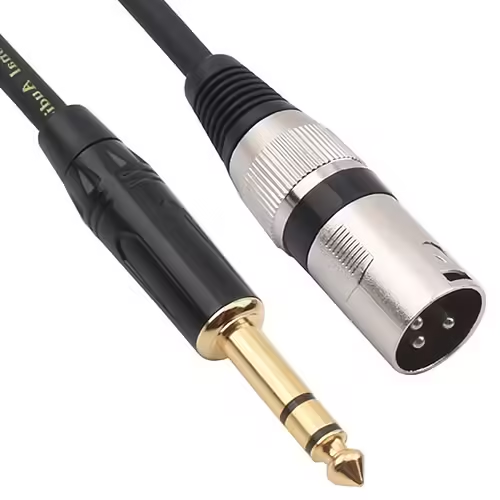
1, TRS to XLR Cable: Combines the features of TRS and XLR, used in high-quality audio connections.
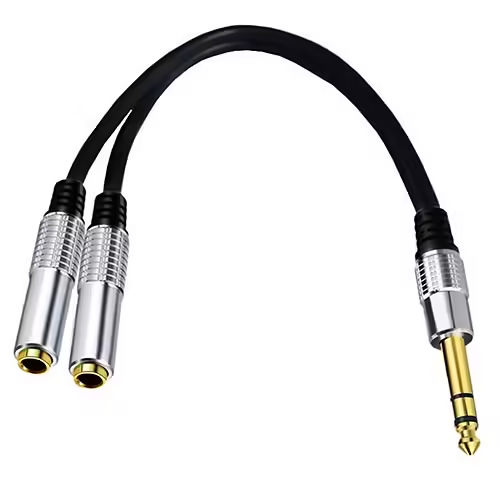
2, TRS Y Cable: Splits the signal into two separate channels, often used in recording studios.
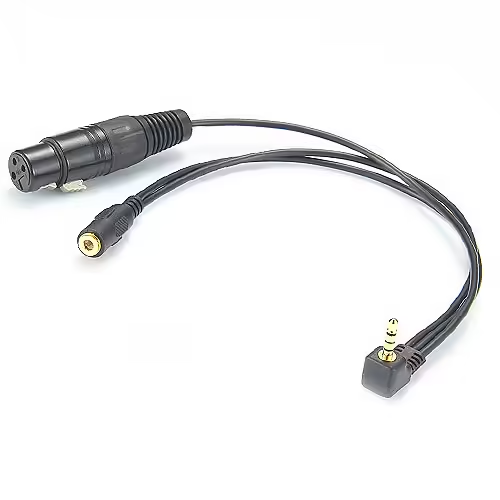
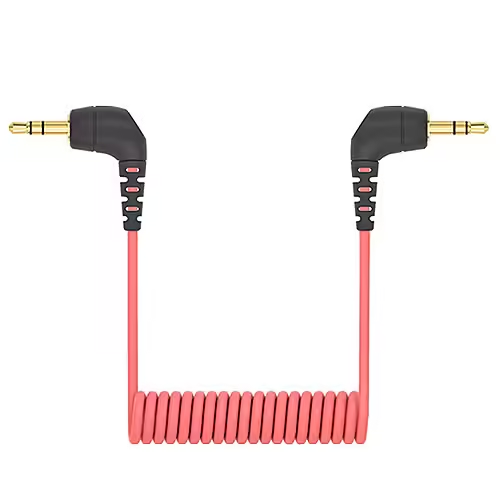
3, Right Angle TRS Cable: Used in tight spaces for easy access.
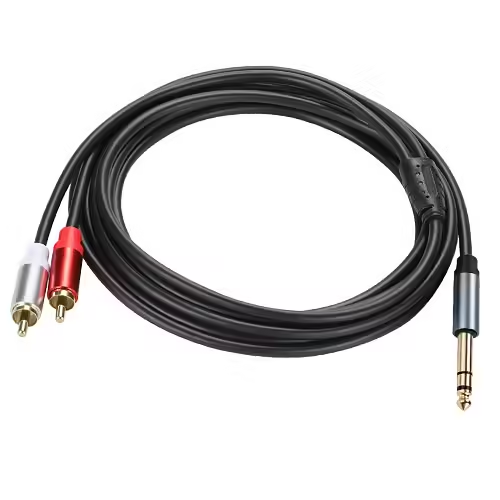
4, TRS to RCA Cable: Connects devices that use RCA connectors for audio signals.
5, Patch Cable: Used for routing audio signals between devices in a studio.
Customizing TRS Cables
Creating custom TRS cables involves:
- Cut the cable to the desired length.
- Stripping the cable to expose the conductors.
- Assembling and soldering the connectors.
- Testing for functionality.
Troubleshooting and Best Practices
When using TRS, TRRS, and TS cables, it’s crucial to use the correct type to avoid noise and distortion. Always check the equipment manual for the recommended cable type and ensure proper connections to prevent interference and signal loss.
Conclusion
TRS cables are versatile and essential in both professional and consumer audio applications. Understanding the differences between TS, TRS, and TRRS connectors and their appropriate uses ensures optimal audio performance and reduces potential issues like noise and signal degradation. Whether for connecting headphones, professional audio equipment, or custom audio setups, choosing the right TRS cable is crucial for achieving high-quality sound.
Please let me know if you need anything else! We are a wire harness and cable assembly manufacturer in China.
.avif)
Sam Wu is the Marketing Manager at Romtronic, holding a degree in Mechatronics. With 12 years of experience in sales within the electronic wiring harness industry, he manages marketing efforts across Europe. An expert in cable assembly, wiring harnesses, and advanced connectivity solutions, Sam simplifies complex technologies, offering clear, actionable advice to help you confidently navigate your electrical projects.