Premier Manufacturer

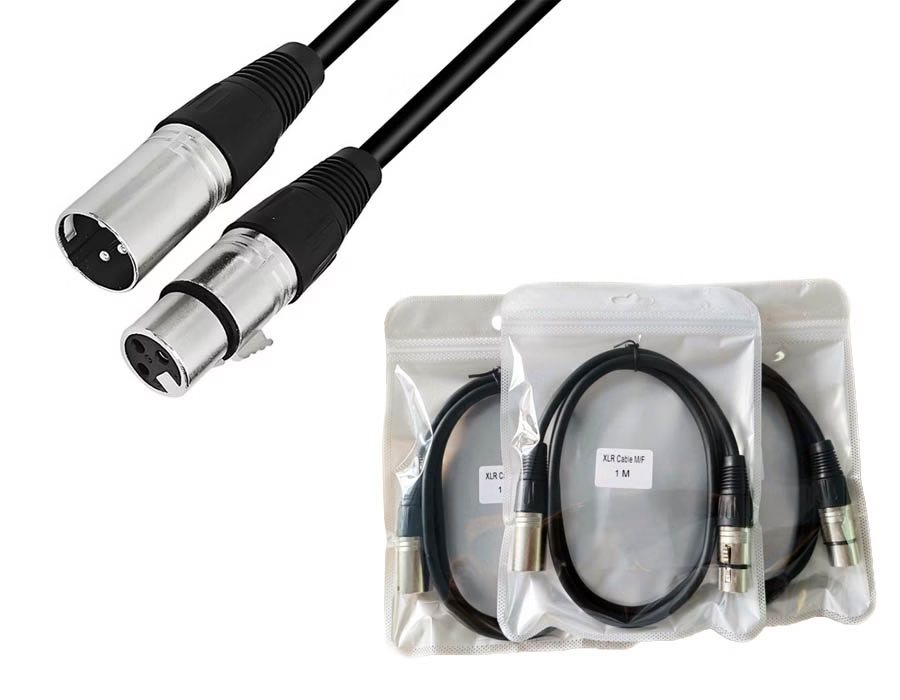
XLR cables are still the foundation of professional audio, live events, and industrial systems. XLR cables have been trusted to carry signals from a studio recording to an outdoor concert, while excluding noise from microphones or bands. This article will examine the latest developments in materials, shielding capabilities, production automation, and global market demands. If you’re planning purchases soon, keep these 2026 trends in mind—they’re already redefining what quality and performance mean.
Global Demand & Market Shifts
The XLR cable market is expanding rapidly, with the market size projected to reach approximately $2.58 billion by 2033 (XLR Cable Market). Live events, home recording, and enterprise audio-visual applications primarily drive demand in North America and Europe. In the Asia-Pacific region, the rapid expansion of media infrastructure is fueling growth in production demand, despite the region’s overall revenue scale already surpassing that of North America, Europe, and Asia.
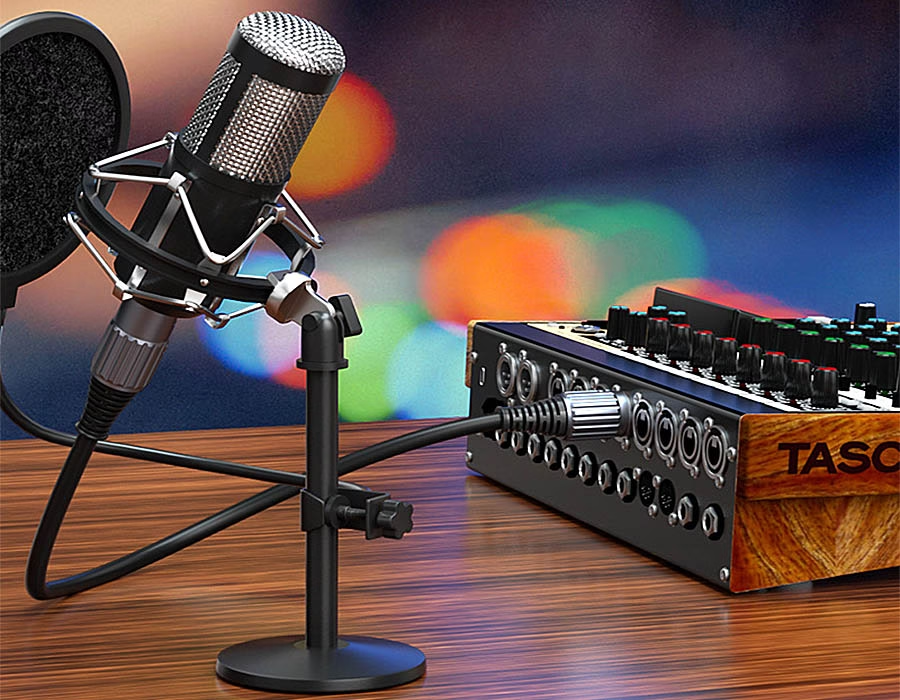
Buyers consider several key factors in procurement, including solid quality, stable supply, and competitive pricing. When purchasing in high volumes, the predictability of lead times is critical, and the ability to customize is a significant reason to choose one supplier over another.
Material Innovations & Sustainability
New conductor alloys (such as silver-plated copper) and jackets (TPEs, halogen-free compounds ) are changing the industry landscape, offering superior conductivity, lifespan, and adherence to international codes. Sustainability is essential, too. Eco-conscious alternatives, such as LSZH jackets, are becoming increasingly common in public spaces.
Enhanced materials can do more than perform; they can also minimize long-term maintenance and ensure compliance.
Shielding Upgrades for Cleaner Signals
Shielding stops unwanted noise from entering. The standard for pro applications in 2026 will be hybrid shielding (foil + braid). This combo guarantees complete EMI/RFI protection from unwanted noise, which is critical in high-interference areas such as broadcast trucks or industrial floors.
| Shield Type | Coverage | Best Use |
|---|---|---|
| Foil | 100% | High-frequency EMI |
| Copper Braid | 70–95% | Durable, flexible setups |
| Foil + Braid | 100% | Critical audio + interference zones |
Good shielding = cleaner sound, and fewer headaches.
Automation & Smart Manufacturing
Contemporary XLR manufacturing centers on speed, accuracy, and options. Smart factories will now automate the processes of cutting, stripping, crimping, and testing. The result is reduced lead time and reduced defects.
Automated, Quality-Assured instruments evaluate continuity, crimp pull force, and even insulation thickness, allowing for improved reliability and traceability on every unit shipped.
➡ Visit Our Process & Services page for more on flowing improvements.
Pricing Trends & Smart Procurement
Adjusting pricing due to fluctuations in copper prices, shipping costs, and regulatory compliance expenses. Long-term planning can be beneficial for large orders. Be sure to balance price with performance; cutting corners on shielding or conductor grade might cost more in the long run.
Consult your supplier about batch testing, certifications, and custom options.
➡ Learn more about custom cable assemblies for tips and solutions.
Looking Ahead: 2026 and Beyond
Anticipate hybrid XLR/digital cables, recyclable jackets, and further embedded diagnostics. Demand will continue to rise in Asia, while regulatory pressure in the EU/US will reward eco-smart sourcing. Quality, speed, and flexibility will be the key differentiators among successful suppliers.
➡ Review how manufacturers will demonstrate compliance and consistency at the Quality Control hub.
FAQs
Foil is undoubtedly a complete coverage solution, often preferred for static installs. Braid offers more flexibility and softness, making it ideal for mobile gear.
Suppose you are pursuing immaculate high-frequency clarity, absolutely. If you are not pushing for high-frequency clarity, OFC copper should easily suffice.
Yes, nearly all modern factories can accommodate total customization in terms of length, color, materials, and plating.
Please don’t hesitate to contact us through our Contact page, and we will begin working on your project.
.avif)
Sam Wu is the Marketing Manager at Romtronic, holding a degree in Mechatronics. With 12 years of experience in sales within the electronic wiring harness industry, he manages marketing efforts across Europe. An expert in cable assembly, wiring harnesses, and advanced connectivity solutions, Sam simplifies complex technologies, offering clear, actionable advice to help you confidently navigate your electrical projects.