


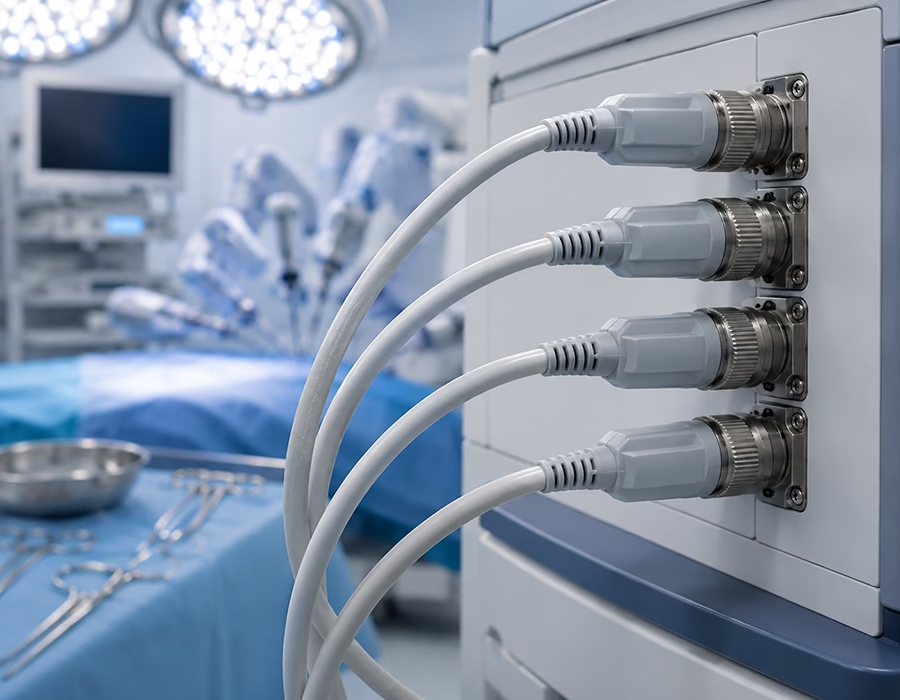
Absolute Pathogen Isolation and Fail-Safe Electrosurgical Control
In the operating room, a biocompatible surgical device has to deliver absolute precision with zero thermal or electrical deviation. That’s true whether you’re building radiofrequency (RF) electrosurgical pencils, advanced endoscopic cameras, or robotic surgical arms. Even a microamp of current leakage can cause severe burns to patient tissue, so these sub-assemblies have to withstand intense electrical stress and aggressive contact with human tissue at the same time.
We design and manufacture biocompatible surgical wire harnesses specifically for that reality. Our custom interconnects are built for low thermal signature, clean dielectric isolation, and total fluid-tight security.
We also bring 29 years of OEM/ODM experience to surgical instrument projects. As a high-mix, low-volume (HMLV) contract manufacturer, we streamline your supply chain. We turn complex surgical wiring schematics into fully validated, sterile-ready medical assemblies.
- ISO 13485:2016-certified facility. We build and audit every surgical assembly under strict medical device quality management systems.
- ISO 10993-compliant materials. We use only non-cytotoxic, non-irritating, hypoallergenic, skin-safe polymers.
- Three-gate testing, every unit. We run a 100% post-termination optical sweep, a 100% post-overmold dielectric test, and a final 100% functional serialization.
- Autoclave- and steam-resistant. Our custom-molded jackets survive repeated autoclaving at 134°C without shrinking, peeling, or degrading.
Technical Specifications and Manufacturing Matrix
| Parameter | Manufacturing Capability | Validation / Material Standards |
|---|---|---|
| Artistry standard | IPC/WHMA-A-620 Class 3 (high-reliability) | Certified IPC workmanship |
| Quality management | ISO 13485:2016 medical QMS | Third-party audited and documented |
| Biocompatibility standard | ISO 10993-5 (cytotoxicity), ISO 10993-10 | Full raw material traceability |
| Insulation & jacket materials | Medical-grade USP Class VI TPU, silicone, PEEK | High-durometer, fluid-hardened polymers |
| Conductor customization | Silver-plated copper alloys, stainless steel tinsel | Ultra-fine gauges down to 38 AWG |
| Sterilization compatibility | Autoclave (134°C steam), EtO, gamma radiation | Zero material degradation |
| Fluid ingress resistance | IPX7/IPX8 hermetically sealed overmolds | High-pressure injection molded |
| Electrical insulation | High-voltage isolation, up to 10kV dielectric | Automated Cirris continuity and insulation testing |
Seven Surgical Device Segments We Build For
We design, tool, and assemble interconnects across seven major biocompatible surgical device categories:
- Electrosurgical unit (ESU) mono/bipolar cables. High-voltage insulation lines prevent leakage during RF cutting and coagulation, with low-attenuation shielding to isolate high-frequency energy.
- Endoscopic and laparoscopic camera harnesses. High-density, ultra-fine micro-coaxial bundles handle heavy digital data streams while still allowing smooth articulation inside tiny surgical entry ports.
- Robotic surgery articulating harnesses. Extreme torsion resistance, high-flex-cycle lifecycles, and low-friction jackets keep control steady through robotic micro-movements — the same underlying physics as flex cabling engineered for millions of cycles on collaborative robot arms.
- Ophthalmic and phacoemulsification handpiece leads. Lightweight, ultra-flexible configurations combine precise fluidics with power delivery lines, cutting surgeon hand fatigue during delicate procedures.
- Orthopedic power tool power lines. Rugged, heavy-gauge cable bundles handle high rotational torque and current loads while staying cool to the touch during bone drilling.
- Catheter and ablation probe interconnects. Micro-miniature wiring routes through ultra-narrow guide channels while maintaining strict thermal and signal accuracy at the probe tip. (We’ve written more on biocompatible harnesses for medical catheters specifically, if that’s your focus.)
- Surgical navigation and tracking sensor cables. Low-noise, shielded networks transmit real-time coordinate data without latency, built for image-guided neurological interventions.
The Romtronic Medical Engineering Standard
We run Design for Manufacturability (DFM) reviews on every print before tooling starts. That’s how we catch common operating-room failure modes early, instead of discovering them after production.
Mitigating Ingress from Bodily Fluids and Saline
During surgery, cables face constant exposure to blood, saline, and harsh chemical prep solutions. We handle this with advanced high-pressure vertical overmolding, which creates seamless, hermetic seals around connector joints. That provides a true IPX8 fluid-tight barrier, so internal shorts don’t happen.
Surviving Repeated 134°C Steam Autoclaving.
Sterilization is non-negotiable, but thermal shock destroys standard industrial wire. So we use premium USP Class VI silicone and PEEK insulation materials instead, which absorb thermal expansion stress evenly without cracking. That keeps the internal copper conductors whole and safe over hundreds of autoclave cycles.
Frequently Asked Questions
Medical-grade USP Class VI TPU, silicone, and PEEK are the standard insulation choices. All three need to pass ISO 10993-5 cytotoxicity and ISO 10993-10 irritation testing before they’re considered safe for patient-contact use.
Well-built surgical cable insulation should handle hundreds of 134°C steam autoclave cycles without shrinking, peeling, or cracking. USP Class VI silicone and PEEK are the materials that typically hold up best under repeated thermal shock.
Even a microamp of stray current leakage in an ESU cable can cause tissue burns during a procedure. Manufacturers prevent this with high-voltage dielectric isolation, often rated up to 10kV, combined with rigorous post-overmold dielectric testing.
Ultra-fine gauges down to 38 AWG are common, especially in catheter and ablation probe interconnects where space inside the device is extremely limited. Silver-plated copper alloys or stainless steel tinsel wire are typical conductor choices for the flex demands involved.
Yes, for anything exposed to blood, saline, or fluid during a procedure. IPX7/IPX8 hermetically sealed overmolds, built with high-pressure injection molding, are the standard way to keep connector joints fluid-tight and prevent internal shorts.
Robotic surgical arms put internal cabling through constant torsion and repeated micro-movements during a procedure. Cables rated for high flex-cycle life, with low-friction jackets, are what keep the conductors from fracturing over the arm’s operational life.
Engage With Our Medical Engineering Hub
Let’s optimize your biocompatible surgical device interconnect architecture. Whether you’re dealing with insulation breakdown from sterilization, current leakage, or prepping to launch a new robotic tool, don’t leave your interconnects to guesswork.
Upload your 2D wire schematics, manufacturing drawings, or BOM directly to our Engineering Hub. Our team of 12 dedicated medical-wiring engineers will audit your project, and we’ll send a comprehensive technical quote within 24 hours.
If your project also involves ophthalmic handpieces, our page on dental and ophthalmic equipment cable assemblies covers that adjacent engineering in more depth. For navigation and tracking sensor work, our patient monitoring systems page is also a related read.