Premier Manufacturer

Automotive Wire Harness Connectors – The Lifeline Of Vehicle Electrical Systems To Ensure Performance In A Smooth State. A Complete guide to automotive wire harness connectors, from introduction basics through selection criteria, deciphering the mysteries of an auto wiring system.

Fundamentals: Roles and Types
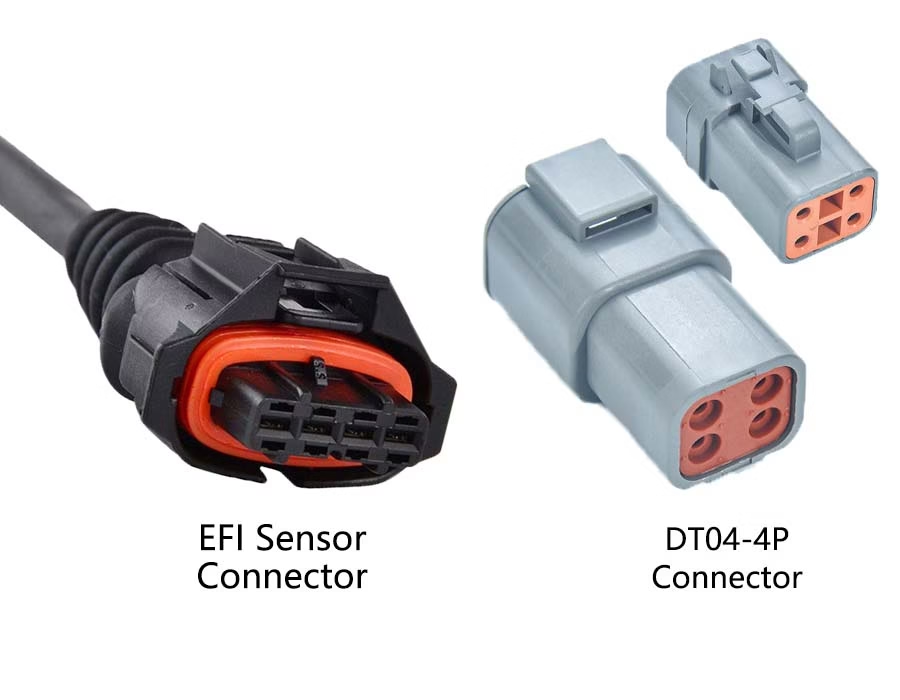
Automotive wire harness connectors create connections and breaks between circuits while providing a connecting point for wires or the whole circuit. They can be classified as:
- Inline or Cable Connectors: Permanently attached to cables that you can insert into other connectors.
- Box or panel connector: Positioned on the device to allow connection to wires.
- PCB Mount Connectors: These are mounted on printed circuit boards and serve as connection points.
- Terminal or Butt Connectors: Used to join sections of wire (or cable) permanently.
Types of Connectors
Common types include:
- Metri-Pack Connectors: Best Sealing vs Heat Performance.
- AMP Superseal Connectors: The perfect solution for hostile environments.
- High power capacity and reliability with Anderson Connectors
- Weather Pack Connectors: These are weather-resistant and fully waterproof.
Terminal and Wiring Harness Connectors
There are terminal connectors for connecting individual wires in a circuit, and there are wiring harness connectors through which wires and terminals pass to significantly affect vehicle performance.
Protection Methods
Protecting your connectors has many options – from adhesive-lined heat-shrink tubing to new wire coverings and terminal seals.
Connector Material Analysis
Considerations include:
- Sheath Material (Plastic Parts): The sheath material generally depends on specific needs, commonly using PA6 and PA66 plastic parts. The most widely used materials include PP, ABS, PBT, and flame-retardant grades, among others.
- Copper Terminal Butts: Brass Or Bronze With Various Finishes As Required.
Harness Seal Design
Wear-resistant, waterproof, and sealing performance: Rubber parts used in automotive wiring harnesses must meet wear-resistance requirements, and leakage-proofing is required in fields (generally engine-cab interface compartments, interfaces, and fuel tank entrances). Different materials, such as natural rubber, neoprene, silicone rubber, or EPDM, have different performance characteristics.
Automotive Wire Harness Connector Selection Principles
The selection of appropriate connectors is vital to guarantee the smooth operation of the automobile. Consider the following principles when making choices:
- Connectors Rated Current: This ensures that the electrical load current is connected to its intended load.
- Connector Size: Select the size based on available installation space and circuit density.
- Cuffing Strength: Maintains the fit of plugs in sockets.
- Wire Gauge: Choose connectors to match the wire size.
- Configuration and wiring size: Ensure it is compatible with the vehicle’s needs.
- Operating Voltage: Choose a connector that works off the vehicle’s voltage.
- Agency Approvals: Ensure compliance with industry-specific standards.
- Affordability: Choose connectors that fall within the budget constraints.
These selection principles for the proper connecting type contribute to vehicle performance and safety.
In brief, everyone in the automobile industry should be well-informed about automotive wire harness connectors, which can speed up troubleshooting and maintenance jobs and improve the performance and safety of vehicle electrical systems.
Custom Car Wire Harness
The commitment to providing customized wiring harnesses by Romtronic is the reason why they attract automotive manufacturers as their clients, because it offers a quality, innovative, and cost-effective solution along with excellent support from customer representatives who are ready to answer any queries – making sure issues, doubts,s or confusion in an OEM’s mind can be cleared off. With a strategy like Romtronic, manufacturers can equip their vehicles with reliable, high-tech electrical systems that meet the consumer requirements of contemporary cars.

Apple Liu is Romtronic’s Marketing Manager, focusing on business growth across the Asian market. With a background in International English and eight years of sales experience in the electronic cable and harness industry, she brings both in-depth industry knowledge and a global outlook to her role.
In addition to leading market strategy, Apple also oversees content development and editorial work—crafting clear, engaging messaging that reflects Romtronic’s values and technical strengths. She is passionate about digital engineering and is committed to strengthening Romtronic’s brand presence and innovation in a competitive global landscape.