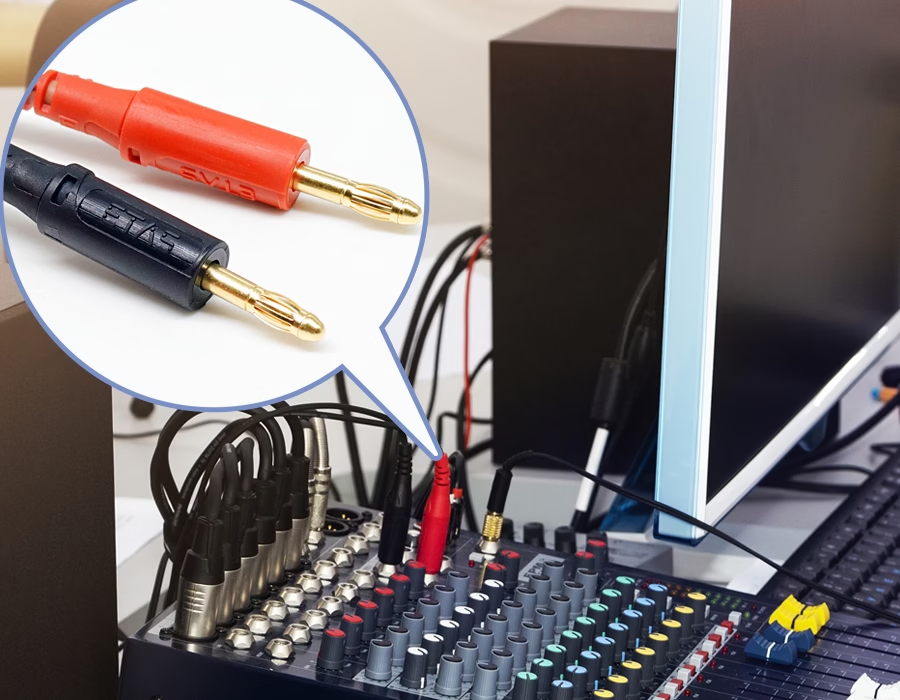
If you have placed an order for an individual cable from a supplier, it may have seemed simple; however, if you expect this product to be available in the market for the duration of 5 to 10 years (or more), you need to make a strategic decision about selecting a suitable cable partner.
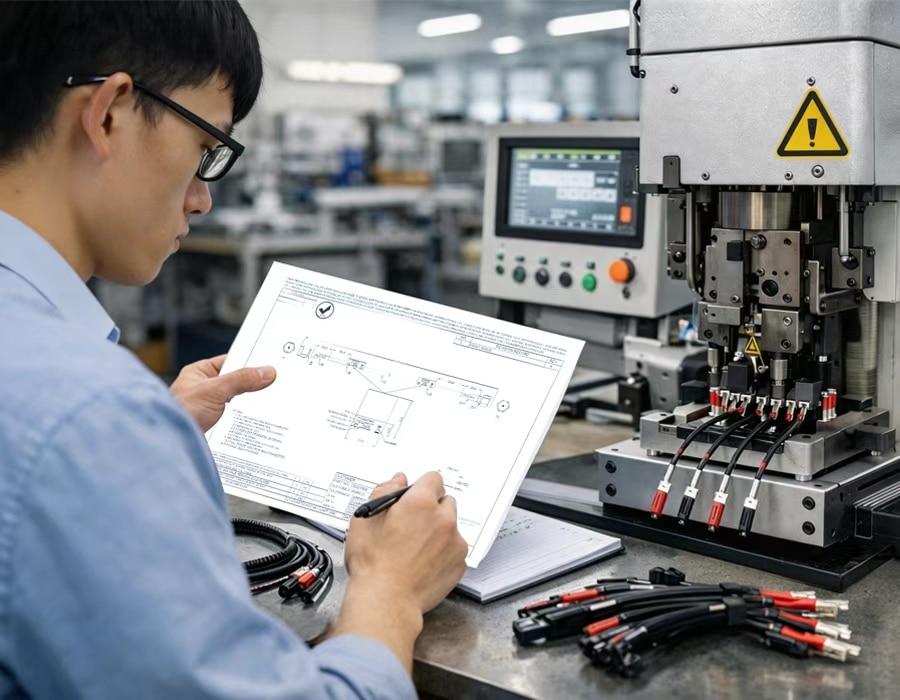
That partner will not only provide cable assemblies (i.e., quantities of parts) for your product, but will also assist in managing costs, quality, risk, and scalability throughout the product’s lifecycle.
Whether you are involved in the automotive industry, electric vehicle charging infrastructure, industrial automation, or medical devices, this guide will help you consider and evaluate what to look for when choosing a long-term cable supplier.
Why Multi-Year Cable Programs Require a Different Approach
In making short-term sourcing decisions, a buyer usually considers only price per unit and lead time, whereas in multi-year programs, they consider a much broader perspective. Other key factors include:
- Engineering collaboration over time
- Supply chain resilience and risk mitigation
- Component obsolescence planning
- Change management discipline
- Lifecycle cost stability
- Production scalability
When your program has a life cycle of 5-10 years or longer, even a minor deficiency in your supplier’s processes could lead to unexpected future costs.
Understand the Full Lifecycle of Your Cable Program
A qualified cable partner supports every stage of the program—from early design to mass production and ongoing revisions.
1. Early Engineering & DFM Support
Preventing mistakes before production starts is far cheaper than fixing them later. Look for a partner who provides:
- Design for Manufacturability (DFM) reviews
- Signal integrity and EMI risk evaluation
- Bend radius and strain relief validation
- Durability and Environmental Testing Support
- Material selection guidance
If a supplier only quotes drawings without engineering feedback, the risk is already built into your program.
2. Smooth NPI to Mass Production Transition
Prototypes can be misleading. Real risk appears during volume ramp-up.
A capable partner should demonstrate:
- Controlled New Product Introduction (NPI) workflows
- Pilot run validation
- Process capability tracking
- Crimp height and overmolding consistency
- Automated or semi-automated wire processing
Smooth ramp-up reduces failures and cost spikes early in the lifecycle.
3. Change Management & Revision Control
Over a period of five to ten years, change is guaranteed. You are going to have to diligently manage component revisions and regulatory updates, and find alternatives to materials. Your partner will have:
- Formal Engineering Change Notice (ECN) workflow
- Revision-controlled documentation
- Full lot traceability
- Structured implementation timing
Without strong change control, multi-year stability is impossible.
Key Criteria When Choosing a Long-Term Cable Supplier
1. Engineering Depth — Not Just Sales Support
Look for real engineering capability:
- Alternative component recommendations during shortages
- High-speed signal integrity evaluation
- Harness routing optimization for durability
- Compliance with UL, RoHS, and REACH
- Continuity, Hi-Pot, and pull-force testing
A partner with true engineering depth transforms from a vendor into a strategic collaborator.
2. Supply Chain Resilience
Global supply chain disruptions are no longer rare. Evaluate whether your supplier has:
- Multi-source raw material strategies
- Approved Vendor Lists (AVL)
- Obsolescence monitoring
- Safety stock policies
- Long-term supplier agreements
A partner without proactive supply chain management increases program risk.
3. Lifecycle Cost Stability
The lowest price in year one may not be the lowest total cost over 5–10 years. Look for:
- Total Cost of Ownership (TCO) focus
- Scrap rate control and yield improvement
- Automation investment plans
- Annual cost-down strategies
Lifecycle cost management is as important as quality and delivery.
4. Quality Systems & Traceability
Consistency is key, especially for regulated industries:
- ISO-certified quality systems
- IPC workmanship standards
- 100% continuity testing
- Hi-Pot insulation validation
- Pull-force crimp verification
- Full batch traceability
Consistency over years—not just audits—defines true quality maturity.
5. Capacity & Scalability
Programs grow and change. A long-term partner should provide:
- Scalable production capacity
- Automated wire processing equipment
- Preventive tooling maintenance plans
- Flexibility for high-mix, low-volume production
Scalability protects your program when demand shifts unexpectedly.
Risk Management in 5–10 Year Cable Programs
Long-term programs face predictable risks:
- Component obsolescence
- Supplier instability
- Tooling wear
- Regulatory changes
- Design revisions
- Logistics disruptions
Leading manufacturers mitigate risk with:
- Dual-tooling strategies
- Alternative component pre-validation
- Periodic lifecycle reviews
- Preventive maintenance schedules
- Cross-qualified suppliers
Risk management should be engineered into the partnership—not added after problems occur.
Red Flags to Avoid
Be cautious if a supplier:
- Focuses only on the lowest price
- Lacks in-house testing capability
- Cannot explain ECN processes
- Relies on a single material source
- Offers limited documentation transparency
- Shows no automation investment
Multi-year programs require operational discipline.
Strategic Cable Partnership vs Transactional Sourcing
| Transactional Vendor | Strategic Cable Partner |
|---|---|
| Focuses on unit price | Focuses on lifecycle value |
| Reactive problem-solving | Proactive risk management |
| Minimal engineering input | Collaborative design optimization |
| Short-term quoting mindset | Multi-year program stability planning |
If your program lasts more than a few quarters, your sourcing model must evolve accordingly.
Final Evaluation Checklist
Before making a commitment to your supplier, consider whether they possess the following qualities:
- Participates in early design discussions
- Manages ECNs systematically
- Maintains full traceability
- Has automation and expansion capacity
- Monitors component lifecycle status
- Provides supply chain redundancy
- Supports continuous cost improvement
✅ A disciplined evaluation now prevents expensive surprises later.
Conclusion: Partner for the Entire Lifecycle
When your product stays in the market for years, your cable supplier becomes part of your long-term stability strategy.
The right partner supports engineering, quality, cost, scalability, and risk management across the entire lifecycle. Choosing carefully at the start protects both your program and your reputation for the next 5–10 years.
.avif)
Sam Wu is the Marketing Manager at Romtronic, holding a degree in Mechatronics. With 12 years of experience in sales within the electronic wiring harness industry, he manages marketing efforts across Europe. An expert in cable assembly, wiring harnesses, and advanced connectivity solutions, Sam simplifies complex technologies, offering clear, actionable advice to help you confidently navigate your electrical projects.