


If your bike’s electronics are acting up, or if you are tired of splicing wires just to add some basic accessories, it is time to look at your wiring loom. Think of your motorcycle wire harness as the bike’s nervous system. Over time, engine heat, road vibration, and moisture degrade the stock insulation, leading to electrical gremlins or complete ignition failures.
When upgrading, you face a major crossroads: do you buy a factory-original OEM harness or install an aftermarket loom? Both choices offer distinct advantages depending on your specific riding goals.
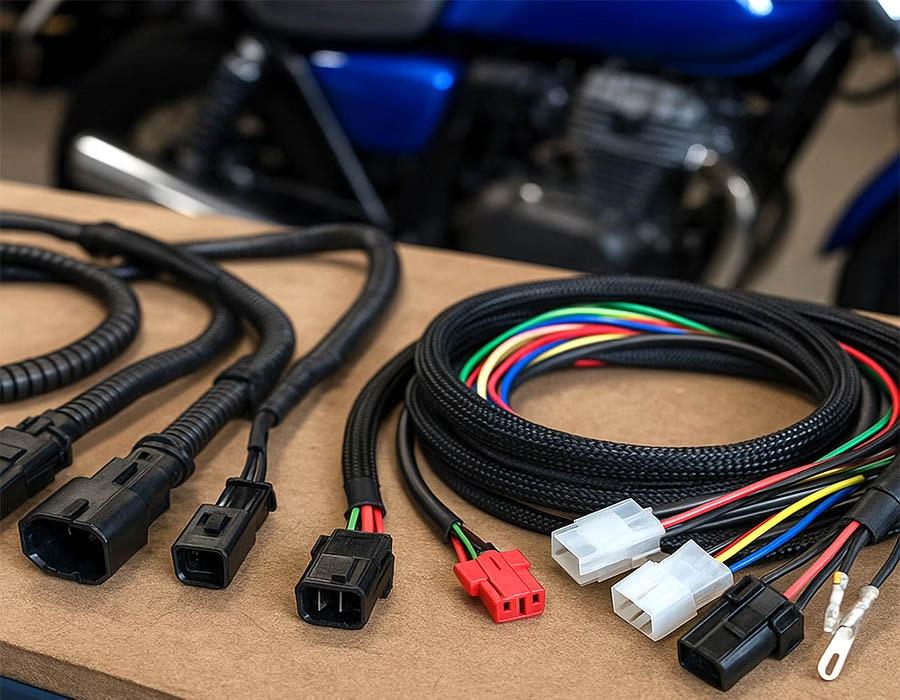
OEM harnesses are manufactured by the original equipment manufacturer (OEM) to fit your exact model. They plug in perfectly and meet the bike’s specifications. Aftermarket harnesses, on the other hand, can be universal or custom-built. They often cost less and can be tailored for special projects, such as racing, lighting kits, or touring setups.
Key Considerations: Here’s a quick comparison of OEM vs. aftermarket wiring harnesses:
| Feature | OEM Harness | Aftermarket Harness |
|---|---|---|
| Fit/Integration | Model-specific, plug-and-play | Universal/multi-fit, many use OEM plugs |
| Quality | OEM wires tested for heat/vibration | Depends on builder; premium units match OEM |
| Cost & Warranty | Higher cost, factory support included | Lower cost; check vendor policies |
| Customization | Fixed design, stock features only | Highly flexible: add lights, sensors |
| Use Case | Repairs & stock rebuilds | Upgrades, racing, custom builds |
In practice, a Harley-Davidson rider might install an aftermarket quick-disconnect harness to add a new Tour-Pak with built-in lights. Meanwhile, a Honda or Kawasaki owner restoring an older model may prefer a direct-fit OEM wiring kit to avoid splicing. Premium sportbikes (Yamaha, Ducati, KTM) often utilize stripped-down racing harnesses for weight savings. At the same time, cruisers (such as Harley and Indian) may require heavy-duty touring harnesses with extra wiring for audio or heated gear.
OEM Wiring Harness Pros
Exact Fit and Reliability. OEM harnesses use the bike maker’s original specifications. Connectors line up perfectly, and insulation meets exact temperature and oil-resistance requirements. Installation is usually straightforward – plug in the harness; no modification needed.
Factory Quality Tested. OEM parts are tested to the manufacturer’s standards, so you rarely see fitment issues or early failures. Manufacturers back OEM harnesses with official support or a warranty, providing extra peace of mind for restorations or maintenance.
Aftermarket Wiring Harness Pros
Customization and Flexibility. Aftermarket harnesses shine in flexibility. Builders can tailor the loom to your specific needs, including extending wire lengths, adding connectors, or bundling only the circuits you require. For example, Romtronic’s custom harnesses use premium materials and OEM-style connections to ensure reliability. They meet certification requirements and are built to resist vibration and harsh conditions. Romtronic even offers racing harnesses with flameproof DR25 jackets and MIL-spec connectors that meet motorsport standards. These high-end harnesses often omit nonessential circuits to save weight, trading some convenience for performance.
Example: Aftermarket plug-and-play kits (like quick-connect LED adapters or handlebar extension harnesses) make adding accessories painless. Just be sure you or your mechanic knows which wires go to which part, and check the vendor’s wiring diagram.
Brand-Specific Use Cases
Different bikes have different needs. Here are examples for popular brands:
- Harley-Davidson: Harleys often utilize heavy-duty wiring. Aftermarket plug-in kits (like quick-disconnect looms) make adding lights or audio easy. Touring Harleys benefit from harness upgrades that support extra audio and passenger gear.
- Honda: Classic Hondas (CB, GL series) run on simple OEM looms. Sport models (CBR, CRF) sometimes use custom racing harnesses for performance.
- Yamaha: R-series and MT sportbikes may use custom harnesses tuned for high RPMs. Older Yamahas (FZ, XS models) often need new kits to replace worn insulation.
- Kawasaki: Ninja and Vulcan models benefit from reinforced aftermarket looms. Vintage Kawasakis (Z-series, GPZ) often require OEM-style replacement kits for their headlights and ignition systems.
- Suzuki: GSX and SV series riders upgrade wiring when adding accessories. Complex looms, such as the Hayabusa, can be simplified with a bespoke racing harness.
- BMW: GS adventure bikes get auxiliary harnesses for fog lights and chargers. BMW sport models (S1000RR) might use stripped-down race looms.
- Ducati: High-end Ducatis sometimes run lightweight racing looms. Custom builds (Monster, Panigale) often need harnesses for aftermarket ECUs and diagnostics.
- KTM: Off-road KTMs have minimalist looms, but riders often use water-resistant aftermarket harnesses. On-road KTMs (Duke/RC) may be compatible with performance wire kits.
- Indian: Modern Indians (Chieftain, Roadmaster) have extensive stock wiring. Owners upgrade to thicker-gauge looms to accommodate additional lighting and audio systems.
- Triumph: Bonneville and Street Triple bikes are frequently rewired in custom builds. Aftermarket looms simplify the addition of LED indicators or EFI conversions.
Choosing the Right Harness
Consider your project: OEM harnesses are ideal for like-for-like replacements or vintage restorations, since they preserve the original wiring layout and quality. Aftermarket or custom harnesses excel in performance builds and tech add-ons. Always check quality: look for builders with ISO/IATF certifications and UL listings, and carefully review wiring specifications (including copper gauge and jacket material).
Romtronic: Custom Harness Expertise
Romtronic (our factory) specializes in custom motorcycle wiring harnesses. We have over 29 years of experience delivering harnesses for bikes, scooters, and superbikes. Our looms utilize premium automotive-grade wire and connectors, carefully arranged for maximum reliability. Romtronic’s production is ISO 9001:2015 and IATF 16949:2016 certified, as well as UL and CE certified, ensuring global quality and safety standards. Our factory offers both OEM and ODM services, providing quick sampling and production. We back every harness with full technical support.
Conclusion: Upgrading your motorcycle’s harness is worthwhile for reliability and new features. OEM harnesses guarantee a perfect fit and factory-grade materials, while aftermarket and custom harnesses allow you to add modern tech and performance options. Select the solution that aligns with your bike’s brand, riding style, and project objectives. The correct harness keeps the electrical system running smoothly.
See our Romtronic custom motorcycle wiring harness page for details and a free quote.
Motorcycle Wire Harness FAQ
Answer: It depends on the harness design. Universal aftermarket harnesses usually require manual splicing or pin crimping to match your factory components. However, premium custom-built harnesses utilize matching OEM-style connectors (such as Sumitomo or Yazaki) to ensure a direct, plug-and-play fit without cutting your stock wiring.
Answer: Track bikes operate under extreme heat and physical stress. Tefzel (ETFE) insulation is much thinner and lighter than standard automotive PVC, which reduces total harness weight. Raychem DR-25 shrink tubing provides superior resistance against gasoline, hot oil, and high temperatures, keeping the delicate copper strands protected during intense track runs.
Answer: High-draw accessories pull more current than standard thin-gauge factory wiring can safely handle. Consequently, you must run a dedicated accessory harness directly from the battery using a relay. Using 14 AWG or 16 AWG pure copper wire for these auxiliary lines prevents overheating and maintains consistent voltage to your devices.
Answer: Ground circuit failure and bullet connector oxidation cause 90% of vintage electrical issues. Older bikes rely on single frame grounds that corrode over time. Modern replacement harnesses solve this by routing a dedicated copper ground wire directly back to the negative battery terminal, eliminating intermittent connection drops.
Answer: No. While older carbureted bikes can run on a simple “naked” 5-wire loom, modern fuel-injected motorcycles require complex sensor feedback. The engine control unit (ECU) relies on continuous signals from the O2, throttle position, and crank angle sensors. Removing these circuits to simplify the loom will trigger error codes and put your engine into limp mode.
.avif)
Sam Wu is the Marketing Manager at Romtronic, holding a degree in Mechatronics. With 12 years of experience in sales within the electronic wiring harness industry, he manages marketing efforts across Europe. An expert in cable assembly, wiring harnesses, and advanced connectivity solutions, Sam simplifies complex technologies, offering clear, actionable advice to help you confidently navigate your electrical projects.

