Premier Manufacturer

If you have ever been waiting on a custom cable assembly while your deadline creeps closer, you know lead times can be an emotional experience. Sometimes things happen quickly, and other times the clock ticks with little to no movement–and there are very few people who enjoy that surprise. The fact is, lead times for cable assemblies are not random events. They are shaped by a handful of predictable variables that, once understood, will allow for much more predictable planning.
Here is an easy, real-user explanation of what really affects cable assembly delivery times and why.
1. How Complex the Cable Assembly Is
Some cable assemblies are elementary and thus much quicker; they use standard connectors and lengths with no special requirements. These generally float through production.
But, once you add something unique like custom pinouts, specific jackets, unique overmolding, new tooling, anything that requires engineering review, etc., the lead time is automatically longer. The prototype’s lead time will add extra time, as it takes to validate the design before transitioning to mass production.
Think of it this way:
More customization = more steps = more time.
2. Whether the Components Are in Stock
Component availability is one of the biggest drivers of lead time.
If your design includes standard parts from companies such as Molex, TE, JST, Hirose, or code brands, and the factory has them in stock, production can begin as soon as the order is placed. However, as soon as you require a part that must be imported, is back-ordered, or sourced from abroad, the lead time increases.
The global supply chain comes into play here as well. Inventory levels in different regions of the world can vary considerably. While there may only be a 2-5 day difference in shipping from China, the process can become more arduous, and customs and review procedures can easily add days or weeks.
3. Production Capacity and the Factory’s Workflow
Even when components are on-site, the order is still put in a queue for production to bring it to assembly.
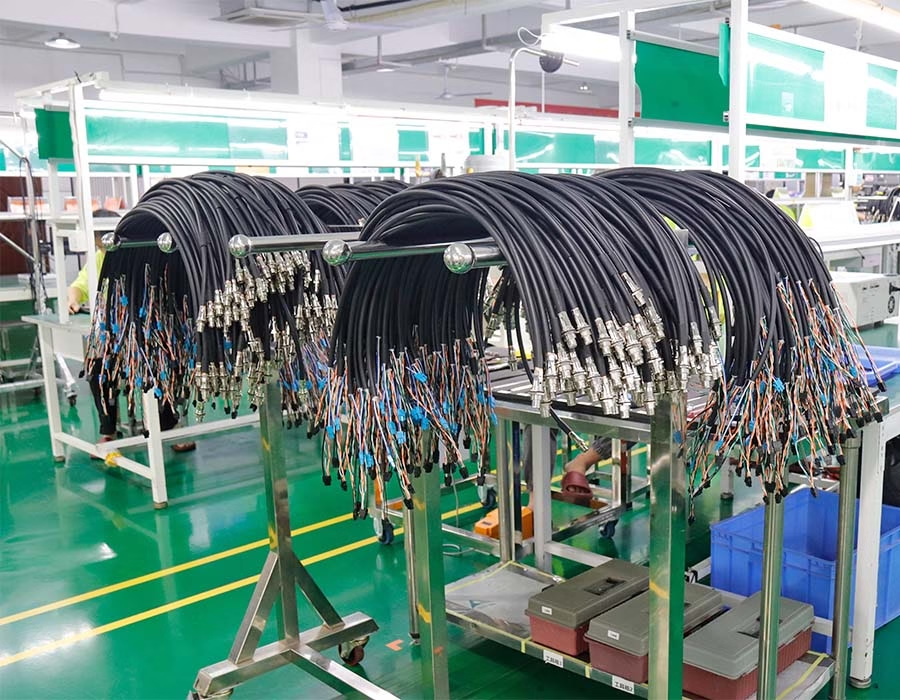
Cable assembly is generally a multi-step process that includes cutting, stripping, crimping, soldering, overmolding, heat-shrinking, and finish tests/inspections. While automation can significantly speed things up, the timing is still affected by machine availability and staffing levels.
During peak seasons in the industry, when everyone rushes to manufacture to replenish inventory or produce new products, lead times lengthen, and schedules fill up fast.
4. The Type of Testing Your Cable Needs
Testing isn’t optional, but the type of testing changes the timeline.
- Basic continuity tests: quick
- Hi-pot, impedance, or signal integrity tests: slower
- Certifications for U.S./EU markets (UL, CE, RoHS): extra steps and extra documentation
Stricter requirements mean more checks—and more time to get everything right.
5. Order Quantity and Special Packaging
Small prototype runs generally require a quick turnaround because they do not involve mass production scheduling. A larger production takes longer due to the materials consumed, handling, and additional testing.
Special packaging—custom labels, serial numbers, branded or anti-static bags, or export-ready boxes—can add a little extra time.
6. Communication and Engineering Feedback Speed
One factor that can be overlooked is the promptness of communication.
Slow responses, poorly annotated drawings, or missing details (often because of a rough review process) can delay a project before a single cable is made. This is compounded by time zones, especially when working with China, where almost an extra day passes with the back-and-forth of communication.
Fast, clear communication can be one of the easiest ways to reduce lead times!
7. Seasonal and Market Conditions
A few annual events consistently affect lead times across the electronics industry:
- Q2 and Q4 production surges
- Chinese New Year (factories shut down for 2–4 weeks)
- Global material shortages
- Freight slowdowns
A little forecasting goes a long way during these periods.
How to Get Faster Cable Assembly Lead Times
Here are a few practical ways to keep your project moving smoothly:
- Provide precise drawings, BOMs, and requirements upfront
- Use standard, widely stocked components when possible
- Approve samples quickly
- Share production forecasts for long-term projects
- Work with manufacturers who maintain inventory and have stable supplier networks
These small steps make a huge difference—especially for OEMs with tight schedules.
Conclusion
The lead times for cable assemblies are affected by design complexity, supply chain conditions, production capabilities, testing requirements, communication speeds, and seasonal market trends. With all these factors properly accounted for, you will be able to plan better and avoid delays — whether you are preparing for a product launch or maintaining a regular production cycle.
If you would still like assistance with estimating a realistic timeline, Romtronic is always here to provide transparent communication, on-time schedules, and comprehensive cable assembly manufacturing.

Apple Liu is Romtronic’s Marketing Manager, focusing on business growth across the Asian market. With a background in International English and eight years of sales experience in the electronic cable and harness industry, she brings both in-depth industry knowledge and a global outlook to her role.
In addition to leading market strategy, Apple also oversees content development and editorial work—crafting clear, engaging messaging that reflects Romtronic’s values and technical strengths. She is passionate about digital engineering and is committed to strengthening Romtronic’s brand presence and innovation in a competitive global landscape.