


Imagine a maze of tangled wires powering a factory machine – a wire harness is the neat solution. In manufacturing equipment, a wire harness (also called a cable assembly or wiring loom) is a pre-assembled bundle of wires, connectors, and protective sleeves that organizes complex wiring into one unit. Instead of running dozens of loose cables, technicians install one harness that plugs into controllers, sensors, motors, and power sources. This grouping brings order to messy bundles, simplifies assembly, and boosts reliability.
🔧 Looking for reliable industrial wire harness solutions?
Romtronic is a leading manufacturer of industrial machinery wiring harnesses, delivering reliable solutions designed for safety, high performance, and long-lasting durability.
📩 Contact our team today to discuss your project →
Industrial wire harnesses are designed to carry power and signals throughout various types of machinery. Their primary role is to transmit electricity and data safely between components. Because each harness bundles multiple conductors together, it saves space and installation time – and it can include terminals, shields, or insulating tape to protect against heat, vibration, and moisture. For example, instead of wiring each light or sensor individually, a single harness can route them all in one secure bundle. This dramatically cuts installation effort and error points in harsh factory environments.
A good harness is customized for its machine. It’s made from insulated copper wires of specific lengths and gauges. Each end of the harness ends in one or more connectors (pins or sockets) that plug into the equipment. Between these connectors, the wires are secured with zip ties, tape, or corrugated tubing for added strength and a neat appearance. The harness design considers layout and safety – wire lengths, terminations, and protective sleeving are planned to ensure that signals travel cleanly and components remain organized.
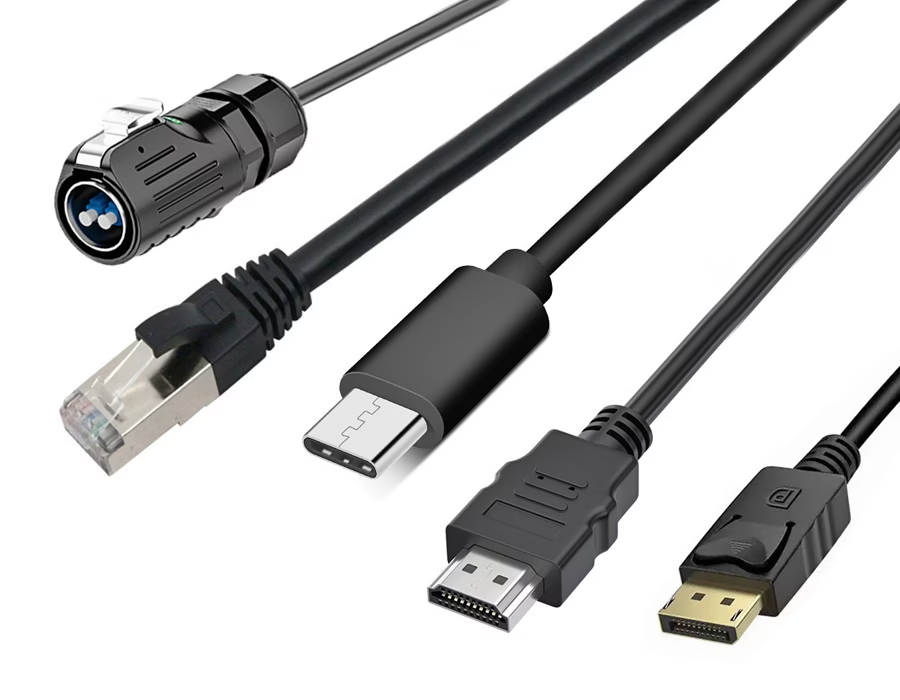
Typical components of a wire harness include: insulated wires or strands (often in various colors), crimped terminals or soldered connections, durable connectors, and outer wraps (heat-shrink tubing or braided sleeving). Some harnesses also include EMI shields or fiber-optic lines if needed. In the photo below, for instance, you see a variety of cable ends (USB, DisplayPort, etc.) – in industrial gear, these would be rugged metal or plastic connectors.
All parts must meet quality standards (for conductivity, insulation, flame rating, etc.) because harnesses often power critical processes.
| Feature | Single Cable/Conductor | Wire Harness |
|---|---|---|
| Definition | A single insulated wire or multicore cable | A pre-assembled bundle of multiple wires, connectors and protective sheaths |
| Components | One conductor (or cord) with insulation | Multiple wires with terminals, connectors, ties or sleeves; assembled to a wiring diagram |
| Installation | Routed one-by-one, which is time-consuming | Plugs in as a unit, greatly simplifying machine wiring |
| Protection | Each cable exposed on its own, limited protection | Bundled and wrapped together; resists abrasion, water, oil and vibration with sleeving or tape |
| Applications | Simple power runs or basic wiring | Complex systems (industrial machines, vehicles, control panels) where many circuits must be routed |
Each wire harness is essentially tailored to its machine. Engineers first draw a wiring diagram of the equipment, then cut wires to length, strip the ends, crimp on terminals, and assemble the bundle. The assembly steps typically include laying out the cables, connecting them by soldering or crimping to connectors, and tying the bundle together in sequence. Finally, the bundle is wrapped, sleeved, and tested. This design-and-build process must adhere to strict standards (often IPC/WHMA-620 or UL standards) because industrial machines are exposed to heat, dust, moisture, and vibration.
Why use a wire harness? In short, harnesses save time and improve reliability. An assembly worker can plug in a harness all at once, rather than routing dozens of loose wires. Bundling keeps wires from chafing or disconnecting – even in harsh environments. For example, in a paper mill or factory, a sealed harness withstands oil and spray better than loose cabling. Harnesses also reduce troubleshooting, as every connection is pin-labeled and standardized, making it easier to locate a fault. In fact, by consolidating wiring, a harness can significantly cut installation errors and fire risk in industrial gear.
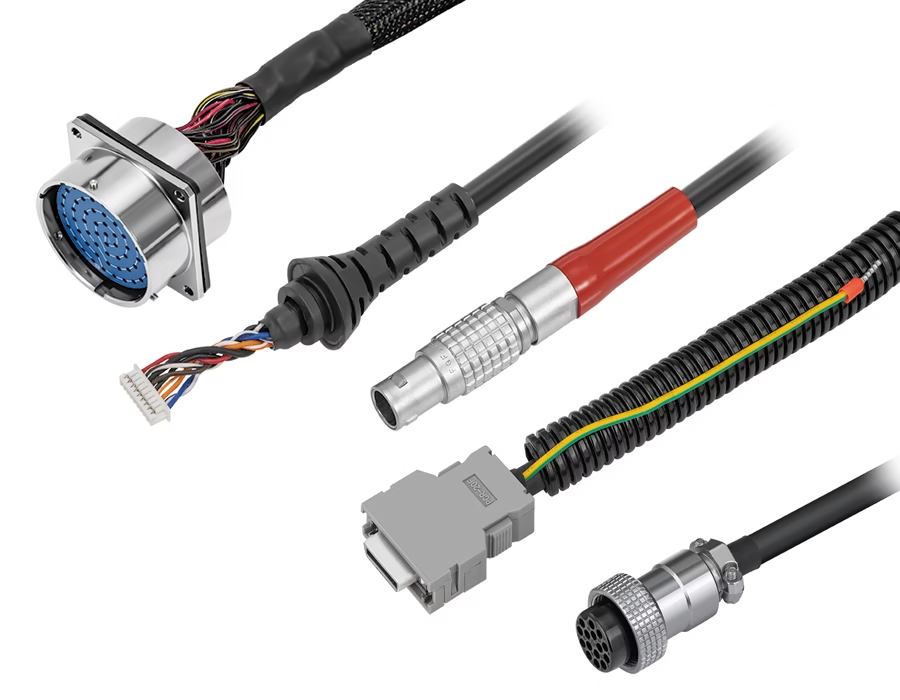
Wiring harnesses are used in machinery across numerous industries. Typical applications include automated production lines, robots, CNC machine tools, packaging systems, and heavy-duty vehicles such as forklifts, cranes, and agricultural machinery. Wherever numerous electrical connections must be established within confined spaces, wiring harnesses are often present. For instance, robotic arms feature wiring harnesses connecting their motor controllers, sensors, and lighting components—all cables are routed safely to prevent interference. The harness shown above incorporates multiple connector types; similarly, industrial harnesses may feature circular sensor plugs or high-power motor terminals at their ends.
In essence, a wire harness is the “nervous system” of a machine, customized to that machine’s needs. It’s more than a single cable – it’s many wires planned and bundled as one neat package. This results in improved organization, faster assembly, and enhanced durability in industrial settings.
⚙️ Want to boost your equipment’s performance with custom harnesses?
Romtronic delivers tailored wiring solutions that improve efficiency, reduce downtime, and meet the toughest industrial standards.
📞 Request a free consultation with our experts →
FAQs
A: It bundles and protects a machine’s electrical wires. Rather than running each wire separately, a harness ties them together with connectors and wraps, allowing power and signals to reach each component. This makes installation quicker and helps prevent chafing or short circuits.
A: A simple cable is usually one insulated cord, perhaps with multiple conductors under one jacket. A wire harness contains many cables/wires assembled into one unit. In practice, a harness might group several cables with tape or tubing for mechanical support. Harnesses often include connectors at the ends. This difference means harnesses offer more protection and organization for complex machinery wiring.
A: Loose wires take longer to install and are prone to damage. A harness’s bundled form means one insertion does the job, and protection (sleeves, ties) shields wires from abrasion, chemicals, and moisture. It also reduces errors: with labeled connectors and a fixed layout, maintenance and testing become much simpler.
A: Typically: insulated copper wires (of various gauges), terminals/crimps or solder joints, rigid connectors, plastic clips or ties, and insulating materials (PVC tape, shrink-tubing, braided loom). Some harnesses even include shielding or grounding wires. Every component is carefully selected to meet the machine’s electrical and environmental requirements.
A: Almost every factory machine uses them. Look inside a motor control cabinet, on a conveyor’s sensor array, or on a robot – each often has a harness behind the panels. They also appear in heavy equipment, such as construction vehicles, trains, or large printers, which use harnesses to manage their wiring.
A: When properly made, harnesses are very durable. The materials (thick insulation, robust connectors, heat-shrink tubing, etc.) are chosen for longevity. Many industrial harnesses last the lifetime of the machine if kept undamaged. Routine checks ensure connectors stay tight and insulation remains intact.
Overall, an industrial machinery wire harness is the organized backbone of a machine’s electrical system. It bundles numerous wires into a safe and efficient package, allowing power and data to flow reliably wherever needed. By using harnesses, factories keep machines running smoothly and workers productive.
.avif)
Sam Wu is the Marketing Manager at Romtronic, holding a degree in Mechatronics. With 12 years of experience in sales within the electronic wiring harness industry, he manages marketing efforts across Europe. An expert in cable assembly, wiring harnesses, and advanced connectivity solutions, Sam simplifies complex technologies, offering clear, actionable advice to help you confidently navigate your electrical projects.

