


In an era marked by the miniaturisation of medical devices, the compact design of avionics, and the rapid advancement of robotic technologies like AGVs and AMRs, engineers continually face the “density dilemma.” As device sizes shrink, the demand for power delivery and high-speed data transmission grows—yet physical space becomes increasingly precious.
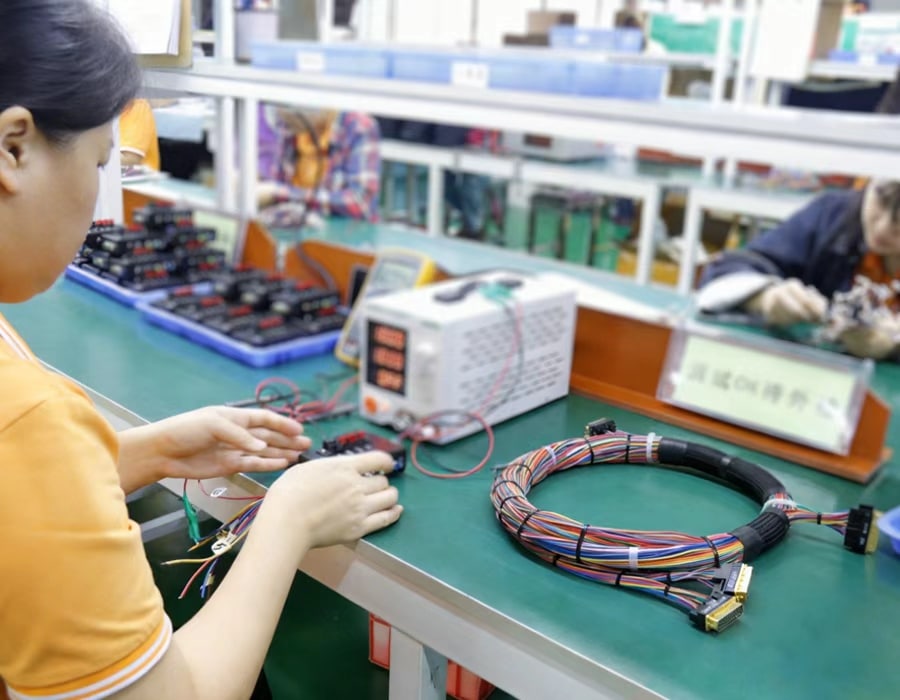
Designing high-density wiring harnesses is far from simply cramming more cables into smaller jackets; it requires striking a delicate balance between signal integrity, thermal dissipation, and mechanical stress. Romtronic specialises in tackling such space-constrained challenges. This guide offers actionable design recommendations to ensure your next high-density project achieves reliability, manufacturability, and high performance.
TL;DR: The Core Pillars of High-Density Design
- Downsize Strategically: Utilising micro connectors and thin-walled insulation materials (PTFE/ETFE).
- Prioritise Signal Integrity: Managing crosstalk through precision twisting and localised shielding.
- Respect the 10x Rule: Maintaining proper bend radii to prevent conductor fatigue.
- Design for Manufacturability (DFM): Ensuring components are testable and serviceable.
1. Component Selection: The Foundation of Miniaturisation
Successful high-density design begins with maximising the pin-to-space ratio. Selecting the wrong insulation material or connector pitch in the early stages may make the harness impossible to route later on.
| Component | Recommendation | Benefit |
| Micro-Connectors | Micro-D, Circular, or 1.27mm (or smaller) pitch | Reduces footprint without sacrificing pin count. |
| Insulation | PTFE, ETFE (Thin-wall) | Excellent dielectric strength with significantly reduced outer diameter. |
| Wire Gauge | 30–32 AWG (Signal), 24–26 AWG (Power) | Saves weight and volume while maintaining performance. |
- Pro Tip: Avoid using bulky PVC insulation. Thin-walled PTFE or ETFE can accommodate more wires within the same bundle diameter.
- Wire Blending: Incorporating multiple wire gauges within a single bundle enables efficient power and data transmission while preventing unnecessary bulk expansion.
2. Managing Signal Integrity in Tight Quarters
High-density cable assemblies are inherently susceptible to electromagnetic interference (EMI) and crosstalk. To ensure data integrity, implement the following three strategies:
- Differential Pair Precision: High-speed protocols (e.g., eDP or USB 3.0) require consistent twisting rates. Even minor deviations in tightly bundled pairs can cause impedance mismatch.
- Localised Shielding: Avoid using a single large, continuous braided shield. Instead, apply individual foil shields to sensitive pairs to prevent “internal” crosstalk.
- Strategic Grounding: Distribute dedicated ground pins throughout the connector layout to provide the shortest return path for high-frequency signals.
Learn more about our Understanding Cable Shielding: Types, Applications, and Key Considerations.
3. The Mechanical Reality: Bend Radius & Strain Relief
The rigidity of dense wire harnesses is unexpectedly high. Neglecting mechanical properties often leads to conductor fatigue or connector housing failure.
- The 10x Rule: Always maintain a minimum bend radius of 10 times the harness’s total outer diameter (OD). Avoid abrupt 90° bends that stress the outer conductors.
- Staggered Terminations: Slightly offset wire lengths at the connector interface. This prevents “bulging” at the rear shell and ensures smoother wire transition into the protective sleeve.
- Overmolded Strain Relief: Use specialised sleeves or rear shells to prevent mechanical loads from being transmitted to precision contact pins.
Learn more in our guides:
Cable Bend Radius: Cable Bend Radius: Design Rules and Common Mistakes and Understanding Strain Relief: Essential Protection for Cables and Hoses.
4. Thermal Management & Current De-rating
Heat is the primary enemy of high-density wiring harnesses. When multiple current-carrying wires are bundled together, heat buildup occurs, potentially leading to insulation degradation.
- Consult the Standards: Bundle size derating factors are specified in IPC-2221 or NASA-STD-8739. Wires buried within dense harnesses must not operate at their rated maximum current.
- Plating Selection: Silver-plated or nickel-plated copper conductors should be used in high-temperature environments, as they exhibit superior thermal cycling performance compared to standard tin plating.
- Heat Dissipation: Avoid excessive tightness in high-voltage harnesses to ensure passive cooling space. Derating must be applied based on the harness dimensions.
5. Comparison of Common Insulation Materials
Choosing the right material is the most effective way to reduce harness volume.
| Material | Wall Thickness | Temp Range | Flexibility | Ideal Use Case |
| PVC | Thick | -20°C to 105°C | Moderate | Standard industrial apps |
| PTFE (Teflon) | Very Thin | -200°C to 260°C | High | High-density, high-temp |
| ETFE (Tefzel) | Thin | -60°C to 150°C | High | Flexible, Chemical resistant |
| Silicone | Medium | -60°C to 200°C | Extremely High | Extreme flexibility, soft harnesses |
Learn more about our Choosing Jacket Material: PVC vs. TPE vs. PUR vs. LSZH vs. Silicone.
6. Design for Manufacturability (DFM)
On the production floor, a “CAD-perfect” wiring harness can become a nightmare. Romtronic emphasises DFM design to ensure compliance with IPC-WHMA-A-620 Level 3 reliability standards.
- Identification: For harnesses with over 100 wires, use colour-coded insulation or laser-etched markings to prevent pin insertion errors.
- Automated Testing: Compatibility with test systems like Cirris is guaranteed. High-density connectors must support continuity and high-voltage insulation-resistance testing.
- Service Loops: A small margin must be reserved near connectors. This design prevents scrapping entire assemblies during rework or re-pinning.
Check out our Design & DFM (Design for Manufacturability) for more details.
Conclusion: Engineering for the Future
High-density wiring harness design represents the precise convergence of physics, geometry, and manufacturing realities. By prioritising thin-walled materials, adhering to the 10x bend rule, and accounting for thermal derating factors, engineers can create systems that meet the demands of next-generation technology without compromising field reliability.
Are you facing space constraints in your robotics or medical projects?
Romtronic’s engineering team specialises in customised high-density interconnect solutions. We don’t just build to specifications—we optimise designs to ensure long-term performance.
👉 Contact Romtronic Today for a Technical Design Review
.avif)
Sam Wu is the Marketing Manager at Romtronic, holding a degree in Mechatronics. With 12 years of experience in sales within the electronic wiring harness industry, he manages marketing efforts across Europe. An expert in cable assembly, wiring harnesses, and advanced connectivity solutions, Sam simplifies complex technologies, offering clear, actionable advice to help you confidently navigate your electrical projects.

